

Best overall: Honda CR-V. Best for stop-and-go commuting: Toyota RAV4 Hybrid. Best budget-focused shortlist: Ford Escape. For League City commuters shopping in 2026, these are starting points—not reasons to overlook a worn engine, a troubled transmission, or an uncomfortable driving position.
Why this matters
A compact SUV has to work on your ordinary drive, not just during a quick trip around the dealership. You need comfortable seats, working air conditioning, useful cargo space, and mechanical condition that fits your repair budget.
I'm Deborah Wedemeyer, owner of Testarossa Motors. My buying judgment starts with the engine and transmission, then moves to the vehicle's usefulness and the risks a buyer can reasonably accept. A familiar badge does not move a questionable vehicle ahead of a sound one.
Testarossa Motors is a fit for Greater Houston buyers seeking clean-title used SUVs with financing options. The dealership buys and sells vehicles, so it has a commercial interest in a sale. You still have the right to verify the vehicle independently and walk away.
What makes the best compact SUV for your commute?
For a used compact SUV purchase in 2026, I put these criteria ahead of appearance or trim badges:
- Mechanical condition: Start with engine operation, transmission behavior, leaks, warning lights, and maintenance records. Cosmetic appeal cannot settle those questions.
- Commute comfort: Check the seat, driving position, air conditioning, road noise, and visibility on roads resembling your normal route.
- Useful space: Bring the items you actually carry. Test child-seat fit, rear-seat access, and cargo loading rather than relying on exterior size.
- Known repair needs: Separate ordinary wear from an unresolved mechanical problem. Get written estimates before accepting either.
- Title and history: Confirm the title status and compare records with the vehicle identification number. A clean title is not a condition report.
- Financing fit: Review the payment schedule, interest rate, loan term, and total amount financed. An acceptable monthly payment does not settle the whole decision.
My practical starting point is to compare 3 vehicles that meet your needs. That is a shopping recommendation, not a claim that the third SUV will be the right one. The comparison helps you recognize differences in seat comfort, condition, and repair needs before committing.
Used compact SUVs at a glance
These use-case rankings apply to the models as shopping candidates. Equipment, drivetrains, dimensions, and condition vary by model year and trim; verify the actual SUV before relying on a feature.
| SUV | Best for | Standout reason to shortlist | Key limitation |
|---|---|---|---|
| Honda CR-V | Overall commuting and family errands | Practical passenger and cargo layout | Gas and hybrid versions need different checks |
| Toyota RAV4 Hybrid | Stop-and-go commuting | Hybrid operation combines an engine and electric motor | Hybrid-system condition requires verification |
| Subaru Forester | Outward visibility | Upright cabin and large windows | Visibility does not replace a careful blind-spot check |
| Mazda CX-5 | Drivers who value steering feel | A driving-focused alternative to prioritize on a test drive | Rear-seat and cargo fit deserve close attention |
| Ford Escape | Budget-focused comparison shopping | Multiple powertrain choices across used examples | Model name alone tells you little about the drivetrain |
1. Honda CR-V: best compact SUV for everyday versatility
The Honda CR-V is my first comparison vehicle for a commuter who also carries passengers, groceries, and family gear. Its passenger-and-cargo layout makes it a useful starting point when you want one vehicle to cover several jobs.
I would not choose a CR-V on reputation alone. Identify the exact engine and transmission, review maintenance records, and drive the vehicle long enough to assess it after it warms up.
Honda CR-V pros:
- Useful starting point for balancing commuting and family errands.
- Rear seating and cargo space can be assessed together without moving into a larger SUV category.
- Gas and hybrid versions give buyers different options to investigate.
Honda CR-V cons:
- Different generations and powertrains prevent a single blanket buying recommendation.
- A practical cabin does not compensate for poor maintenance or unresolved drivetrain symptoms.
Best for: A buyer who wants one compact SUV for commuting, passengers, and everyday loading.
For your 2026 shortlist, sit behind your own adjusted driver's seat before making a decision. Then load the stroller, work bag, or other bulky item that determines whether the vehicle works for you. Do not let an empty cargo area make that decision.
Verdict: Buy a Honda CR-V that passes inspection and fits your daily load; skip one with unresolved mechanical concerns.
2. Toyota RAV4 Hybrid: best compact SUV for stop-and-go commuting
The Toyota RAV4 Hybrid combines a gasoline engine with electric propulsion. That makes it a sensible candidate when your commute includes repeated slowing, stopping, and accelerating—not just uninterrupted highway driving.
I separate the appeal of hybrid operation from the condition of a particular used hybrid. The battery, cooling systems, warning lights, service history, and normal operation all belong in the inspection discussion.
Toyota RAV4 Hybrid pros:
- Hybrid operation suits the stop-and-go portion of a commute.
- It lets you consider electrified driving without choosing a plug-in vehicle.
- It keeps passenger and cargo needs within the compact SUV shortlist.
Toyota RAV4 Hybrid cons:
- A general inspection should not leave hybrid-system questions unanswered.
- Fuel-use expectations must match the exact vehicle and your driving pattern, not a generic RAV4 claim.
Best for: A commuter whose regular route includes substantial stop-and-go traffic.
Check the exact vehicle's EPA fuel-economy information, then compare it with the non-hybrid alternatives you are considering. I would also ask the inspecting shop whether its assessment includes the hybrid system. A quiet test drive is not a battery-health assessment.
Verdict: Buy a Toyota RAV4 Hybrid with verified mechanical and hybrid-system condition; hold if those checks remain unfinished.
3. Subaru Forester: best compact SUV for outward visibility
The Subaru Forester belongs on the list when an upright driving position and outward visibility are high priorities. Its tall cabin and large windows give you a specific reason to try it rather than treating every compact SUV as interchangeable.
Visibility is personal. Your height, seat position, mirrors, and comfort turning your head determine whether the layout actually helps.
Subaru Forester pros:
- Upright cabin layout gives visibility-focused buyers a useful comparison point.
- Large windows make sightlines an important part of the test drive.
- Its SUV layout supports a combined passenger-and-cargo fit check.
Subaru Forester cons:
- Good sightlines do not eliminate blind spots or replace mirror checks.
- Drivetrain condition, tire condition, and maintenance still need verification regardless of the vehicle's reputation.
Best for: A buyer who values seeing out clearly during parking, merging, and neighborhood driving.
During a 2026 test drive, park the Forester in a space similar to one you use regularly. Check the view over your shoulder and judge whether the seat remains comfortable after driving. If the example has all-wheel drive, have the inspector assess its operation and tire suitability.
Verdict: Buy a Subaru Forester when its sightlines genuinely help you and its condition checks out; skip it if the seating position feels wrong.
4. Mazda CX-5: best compact SUV for drivers who value steering feel
The Mazda CX-5 is the candidate I would add when the driving experience matters alongside utility. Steering response, braking feel, seating support, and road noise deserve your attention—not just the equipment list.
That preference has a trade-off. You still need to prove that the rear seat and cargo area work for the people and things you carry.
Mazda CX-5 pros:
- Gives driving-focused buyers a distinct alternative to compare.
- Makes seat support and steering feel meaningful test-drive criteria.
- Lets you assess everyday utility without moving away from a compact SUV.
Mazda CX-5 cons:
- Rear-seat and child-seat fit need a hands-on check.
- A pleasant driving feel cannot excuse leaks, warning lights, or overdue repairs.
Best for: A commuter who enjoys driving and has already confirmed passenger and cargo fit.
I recommend a 20-minute test drive, where the seller permits it, rather than a quick loop. Include ordinary acceleration, safe braking, low-speed turns, and some rough pavement. That duration is a practical starting point; it is not a substitute for a shop inspection.
Verdict: Buy a Mazda CX-5 if you prefer its driving feel and it meets your space needs; skip it if passengers or cargo become a compromise.
5. Ford Escape: best compact SUV for budget-focused comparison shopping
The Ford Escape belongs on a budget-focused shortlist because used examples include different generations and powertrain configurations. That gives you options to compare, but it also makes the exact vehicle more important than the name on the tailgate.
I would identify the engine, transmission, and hybrid or non-hybrid configuration before evaluating an Escape. Then I would compare its condition and documented repair needs against the other candidates—not assume it wins on affordability.
Ford Escape pros:
- Multiple configurations give buyers different candidates to investigate.
- Its compact SUV format supports commuting and ordinary cargo needs.
- It provides another reference point when comparing condition and financing fit.
Ford Escape cons:
- Advice about one powertrain does not automatically apply to another.
- An apparent bargain is not useful when unresolved repairs exceed your available reserve.
Best for: A buyer willing to compare exact vehicles carefully and reject one with uncertain repair needs.
Ask for records and an independent assessment before accepting a repair explanation. A seller's description of a fault as minor does not establish the cause or the work required.
Verdict: Buy a Ford Escape only when the specific drivetrain, inspection findings, and financing terms work for you; skip unresolved problems.
How I rank—and decide whether to buy
These are use-case recommendations, not results from a controlled vehicle test. I rank the CR-V first for broad everyday needs, then give each alternative a separate job. The individual vehicle's condition can reverse that order immediately.
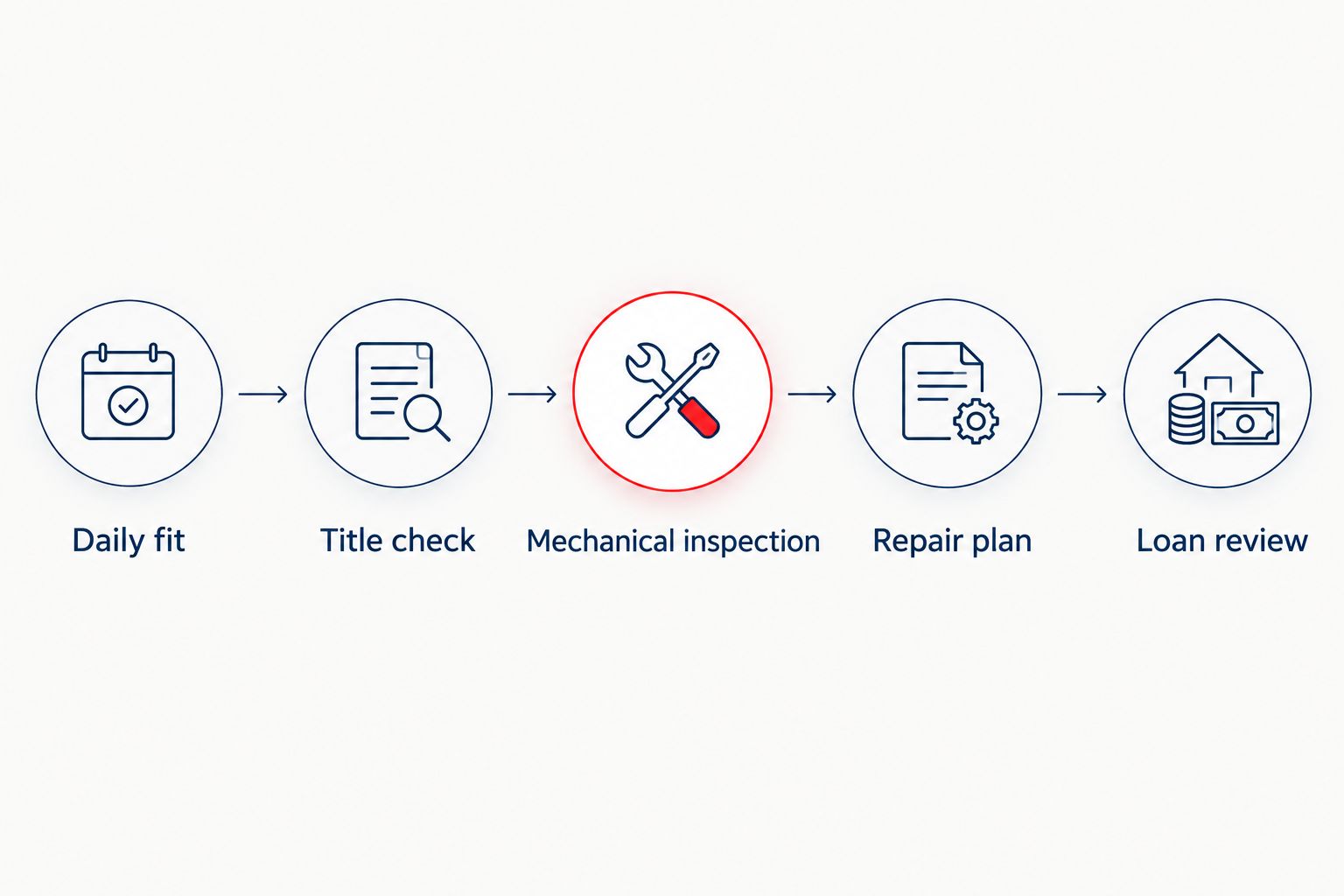
For a purchase in 2026, my decision sequence is:
- Daily fit: Confirm seating, visibility, passenger access, and cargo usefulness.
- Title check: Verify identity, title status, and the records available for review.
- Mechanical inspection: Prioritize engine, transmission, cooling, brakes, tires, and unresolved warnings.
- Repair plan: Get written estimates and decide which known needs you can accept.
- Loan review: Read the financing terms before agreeing to the purchase.
Ordinary wear and unknown mechanical trouble are different risks. Worn tires can be identified and included in a repair plan; an unexplained transmission symptom needs diagnosis before a buying decision.
I also recommend asking whether 2 keys are included. Verify that both work if they are present, and ask about replacement requirements if only one comes with the vehicle. Small details deserve attention before signing, not after.
Testarossa Motors offers financing options, but it does not finance vehicles directly and is not buy-here-pay-here. It does not make money from financing or warranties itself. You should still examine the lender's terms independently.
Which compact SUV should you choose?
Start with the Honda CR-V if you are undecided. It is the most useful default in this shortlist for a buyer balancing commuting, passengers, and everyday cargo.
Choose the Toyota RAV4 Hybrid for stop-and-go driving, Subaru Forester for visibility, Mazda CX-5 for driving feel, or Ford Escape for a careful budget-focused comparison. Those labels tell you where to start—not which vehicle to buy without inspection.
For League City commuters in 2026, I would rather accept ordinary cosmetic wear on a mechanically sound SUV than choose a prettier vehicle with unanswered engine or transmission questions. Keep that priority when the shopping gets distracting.
FAQ
What’s the best used compact SUV for a League City commute?
Honda CR-V is my overall starting point for a League City commuter who also needs passenger and cargo space. Buy based on the specific vehicle’s inspection, maintenance history, and fit—not the model name alone.
Is a Toyota RAV4 Hybrid better for stop-and-go driving?
Toyota RAV4 Hybrid is the shortlist choice for stop-and-go commuting in this guide. Verify the exact vehicle’s fuel-economy information and arrange an inspection that addresses hybrid-system condition.
Should I choose a Subaru Forester for better visibility?
Subaru Forester is worth comparing when outward visibility is your priority. Adjust the seat and mirrors, check over your shoulder, and test parking before deciding whether its layout works for you.
Is a Mazda CX-5 suitable for family commuting?
Mazda CX-5 belongs on a family commuter’s shortlist if the rear seat and cargo area fit the family’s needs. Bring the child seats and bulky items you use rather than judging space from photographs.
Is a used Ford Escape automatically the budget choice?
No, a used Ford Escape is a budget-focused comparison candidate, not an automatic affordability winner. Evaluate the exact powertrain, known repairs, and financing terms against other inspected vehicles.
Does a clean title mean a used SUV has no problems?
No, a clean title does not establish mechanical condition or prove that a vehicle has never been damaged. Review available history, inspect the vehicle, and get an independent mechanical assessment.
Does Testarossa Motors finance SUVs directly?
No, Testarossa Motors does not finance vehicles directly and is not buy-here-pay-here. It offers financing options, and buyers should review the lender’s terms before agreeing to a purchase.
One last thing
A freshly cleaned SUV is easier to like than an unremarkable one with clear maintenance records. Do not confuse presentation with evidence.
Before signing, write down every unresolved concern and ask who will diagnose it. If the answer remains vague, keep shopping. Walking away from uncertainty is a buying decision, not a missed opportunity.
Related guides
- Used SUVs for Houston families
- Clean-title used trucks and SUVs in League City
- Using a tax refund as a car down payment
- Used-car research options in Houston