
Written by Deborah Marie Wedemeyer
My default pick is a gas-powered half-ton pickup for mixed driving and light hauling; a midsize truck makes more sense when parking matters more than bed space. For a Houston buyer with a firm spending ceiling, I would choose the truck with the right configuration and the strongest inspection results, not the longest equipment list.
I’m Deborah Wedemeyer, Founder and President of Testarossa Motors. I have a commercial interest in selling vehicles, and you have every right to bring an independent mechanic into the decision. Start with a used-vehicle inspection checklist before you spend time comparing accessories.
Last updated: 2026
Why condition matters more than the badge
A used pickup has two jobs to prove: it must handle your work and remain suitable for your daily driving. A truck that misses either requirement is the wrong choice, even when the seats, wheels and paint look appealing.
I would separate needs from preferences before shopping. Write down who rides with you, what goes in the bed and whether you actually tow. Then judge every candidate against that list rather than changing your requirements to fit an attractive listing.
What makes the best used truck for your needs?
These are the criteria I would use before ranking any individual truck:
- Mechanical condition: Get an independent assessment of the engine, transmission, steering, brakes and suspension.
- Documented upkeep: Compare service records with the maintenance schedule for the exact vehicle.
- Correct configuration: Confirm cab size, bed length, drivetrain and any required towing equipment.
- Title and history: Match the vehicle identification number across the truck and paperwork. Investigate gaps or inconsistencies.
- Houston-specific checks: Ask directly about flood exposure and have unexplained corrosion, odors or electrical faults examined.
- Ownership fit: Account for insurance, maintenance and repairs before committing your whole budget to the purchase.
A clean title is a starting point, not a mechanical inspection. Testarossa Motors sells clean-title used vehicles, but that title description does not establish the condition of an individual truck.
Used-truck choices at a glance
This ranking compares truck configurations, not verified listings. It does not establish that a particular vehicle meets your spending ceiling; check the current listing and the written transaction details for that.
| Rank and truck type | Best for | Main advantage | Key limitation |
|---|---|---|---|
| 1. Gas half-ton pickup | Mixed personal use and light hauling | A full-size bed and cab choices | Size adds parking demands |
| 2. Midsize pickup | Commuting with occasional hauling | A smaller footprint than a full-size pickup | Less room for bulky loads |
| 3. Regular-cab work pickup | A solo driver carrying tools or materials | A work-focused cab-and-bed layout | Limited passenger flexibility |
| 4. Crew-cab pickup | Buyers carrying passengers regularly | Rear seating with an open cargo bed | Rear-seat space varies by vehicle |
The categories overlap: a half-ton can also have a regular cab or crew cab. I separate them here because each answers a different buying question. Choose the use case first, then inspect the actual truck.
1. Gas half-ton pickup: best for mixed driving and light hauling
A gas half-ton is my starting point when you need one vehicle for errands, commuting and occasional hauling. The full-size layout gives you room to compare different cab and bed combinations without immediately moving into a heavier-duty truck.
“Half-ton” is a class description, not the truck’s exact carrying limit. Read the vehicle’s labels and manufacturer information before deciding what it can carry or tow.
Gas half-ton pros:
- Suits a mix of personal driving and pickup tasks.
- Offers different cab-and-bed combinations to match your needs.
- Provides an open bed for loads you do not want inside a passenger cabin.
Gas half-ton cons:
- Full-size dimensions demand more parking space.
- Capability varies with the exact engine, axle and equipment.
- A larger truck is unnecessary if your loads rarely require it.
Best for: A buyer who needs an everyday vehicle and a useful cargo bed.
On the test drive, I would check steering feel, braking and transmission operation at both neighborhood and road speeds. Ask the mechanic to explain any symptoms rather than accepting “they all do that.”
Verdict: Buy a gas half-ton only when the exact truck passes inspection and fits your actual loads.
2. Midsize pickup: best for commuting and occasional hauling
A midsize pickup deserves a look when most trips involve you, a passenger and a modest amount of gear. Its smaller footprint is useful when your normal route ends in a crowded parking lot or a tight driveway.
Do not assume smaller automatically means cheaper to own. Compare the exact vehicle’s fuel-economy information, insurance quote and maintenance needs.
Midsize pickup pros:
- Takes up less space than a full-size pickup.
- Keeps dirty or bulky items outside the cabin.
- Fits buyers who need a bed without full-size dimensions.
Midsize pickup cons:
- Bed and cabin space can restrict how you use it.
- Passenger comfort depends on the cab configuration.
- Its carrying and towing limits still require verification.
Best for: A commuter who occasionally moves tools, garden supplies or recreational gear.
Bring the dimensions of your usual cargo. If the truck cannot carry what you bought it to move, easy parking does not make up for the mismatch.
Verdict: Buy a midsize pickup for lighter duties; skip it when your regular loads exceed its verified limits.
3. Regular-cab work pickup: best for a solo workday
A regular-cab pickup puts the emphasis on the front seats and cargo bed rather than rear passengers. I would consider this layout when tools and materials matter more than carrying a family.
Judge the bed’s condition as carefully as the cabin. Look at mounting points, the tailgate, tie-down locations and signs of previous equipment installation.
Regular-cab pickup pros:
- Keeps the layout focused on work rather than rear seating.
- Gives a solo driver a clear cab-and-bed arrangement.
- Avoids paying attention to passenger features you do not need.
Regular-cab pickup cons:
- Has limited passenger flexibility.
- Offers little protected space behind the front seats.
- Work use makes a careful inspection especially important.
Best for: A solo driver whose main requirement is moving materials or equipment.
A worn seat does not tell you whether the drivetrain is sound, and fresh upholstery does not prove gentle use. I would ask about the truck’s previous duties and let the inspection test the answers.
Verdict: Buy a regular-cab pickup for a defined work role; skip it if you routinely need rear seats.
4. Crew-cab pickup: best for regular passengers
A crew-cab pickup combines rear seating with an open bed. It belongs on your shortlist when passengers are part of the normal week, not just a remote possibility.
Rear-seat comfort varies. Sit behind the driver’s seat after adjusting it to your driving position, and check the exact seating and restraint arrangements you need.
Crew-cab pickup pros:
- Provides rear seating for regular passengers.
- Separates bed cargo from the passenger cabin.
- Combines passenger trips and pickup tasks in one vehicle.
Crew-cab pickup cons:
- More cabin space does not guarantee the bed length you need.
- Overall size can complicate parking.
- Rear seating requires its own condition and safety checks.
Best for: A buyer who regularly carries passengers and still needs an open bed.
Bring the people or equipment that must fit, including child restraints when relevant. Check installation against the vehicle and restraint instructions rather than judging by appearance.
Verdict: Buy a crew-cab pickup when rear seating is a real requirement; skip the extra cabin if it displaces needed bed space.
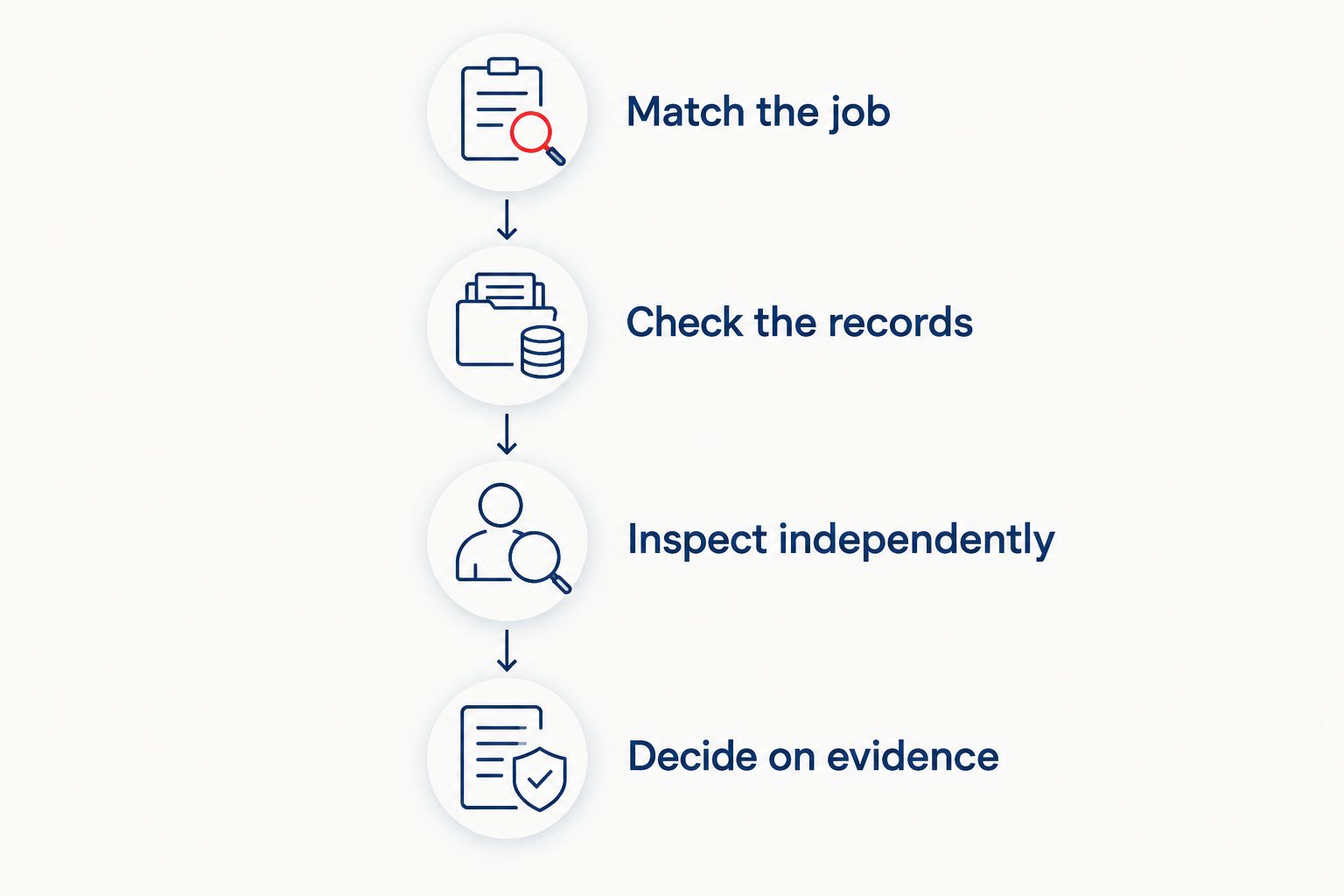
How I would narrow the list before buying
I ranked these configurations by everyday usefulness, cargo needs and passenger requirements. This is not a reliability ranking of engines or model years. Mechanical condition decides which individual truck deserves your money.
Match the job
Write down your heaviest normal load, passenger needs and parking limits. If you tow, identify the loaded trailer requirements before selecting the truck, not after buying it.
Check the records
Match the 17-character VIN on the truck with the title and other documents. Ask for service records and investigate inconsistent mileage entries. A missing record needs an explanation, not an assumption.
Inspect independently
Have a mechanic assess all 4 tires, brakes, suspension, leaks and diagnostic findings. Ask for a written explanation of urgent work and items that need further diagnosis. A quick drive is not a substitute.
Decide on evidence
Keep the listing, inspection findings and written purchase details together. If the seller will not allow a reasonable independent inspection, I would stop the purchase rather than try to price an unknown problem.
What should Houston buyers check locally?
Flood history deserves a direct question in a Gulf Coast truck purchase. Have a mechanic investigate water lines, unusual corrosion, damp padding and electrical faults. An air freshener or a clean carpet proves nothing either way.
For Texas paperwork, TxDMV identifies Form 130-U as the Application for Texas Title and/or Registration. Confirm which documents your transaction requires and who will submit them. Match the buyer, seller and vehicle details before signing.
I would also check open recalls through NHTSA’s VIN lookup and confirm any needed repair with the manufacturer. A history report, a title review and a recall check answer different questions; none replaces the mechanical inspection.
Which used truck should you choose?
Choose a gas half-ton by default, then move smaller for parking, toward a regular cab for solo work, or toward a crew cab for passengers. Do not buy extra capability without a reason, and do not buy too little truck for a job you already know it must do.
At Testarossa Motors, my recommendation is to verify the truck independently before committing. The useful comparison is not just truck against truck. It is each truck against your needs, its inspection findings and the obligations in the paperwork.
FAQ
What is the best used truck for everyday driving in Houston?
A gas half-ton is the default choice for mixed driving and light hauling; a midsize pickup is a better fit when smaller dimensions matter most. Choose the individual vehicle by condition, configuration and independent inspection results.
Should I choose a smaller truck to save money?
Do not assume a smaller truck will cost less to own. Compare the exact vehicle’s insurance quote, maintenance needs and fuel-economy information before deciding.
Does a clean title mean a used truck has no problems?
No. A clean title does not establish mechanical condition or prove that a truck has never sustained damage. Review its history and arrange an independent inspection.
How many miles are too many on a used truck?
Mileage alone is not a reliable pass-or-fail rule. Service records, previous use and inspection findings give the mileage context.
Is four-wheel drive necessary for Houston driving?
Choose four-wheel drive for a defined traction need, not simply because a listing includes it. It does not make driving through floodwater safe.
Can I have a mechanic inspect a truck before buying?
Ask to arrange an independent inspection before committing to the purchase. Agree on access and timing with the seller, and get the mechanic’s findings in writing.
Does Testarossa Motors finance trucks directly?
Testarossa Motors does not finance vehicles directly and is not a buy-here-pay-here dealership. Financing is arranged through outside lenders, whose decisions depend on the application and vehicle.
One last thing
Ask to start the truck when the engine is cold, and tell the mechanic whether it was already warm when you arrived. Starting behavior is part of the inspection, not a detail to save until after the test drive.
My final rule: buy the truck that proves it fits, not the truck you have to explain away.
Related guides
- Used pickup trucks for towing in Houston
- How vehicle age affects financing eligibility
- Does a clean title mean a used car has no problems?
Deborah Wedemeyer, Founder and President