
College students’ used-car buying is choosing transportation for class, work, and home without letting repairs or loan payments crowd out school expenses. For Clear Lake students shopping, I would put mechanical condition, insurance, and a workable budget ahead of appearance or extra features.
Getting to class in Clear Lake
Students commuting to the University of Houston–Clear Lake or San Jacinto College’s south and central campuses often drive Bay Area Blvd, El Camino Real or a stretch of I-45, then park in an open lot all day. That’s a lot of sun and a lot of short trips.
For a student car we’d focus on the basics: tires, brakes, battery, cooling and a working A/C. A smaller car is usually cheaper to insure and fuel, and that leaves room in the budget for the maintenance that keeps it reliable through the semester.
Every car we sell has a clean title and goes through three inspections before we list it. If a parent is co-signing or helping, both of you can look over the paperwork together.
Start with what you actually drive: the trip to campus, your work schedule, and visits home. A vehicle that handles those needs without stretching your finances is a better choice than one bought for a trip you rarely take.
How to choose a student’s first car
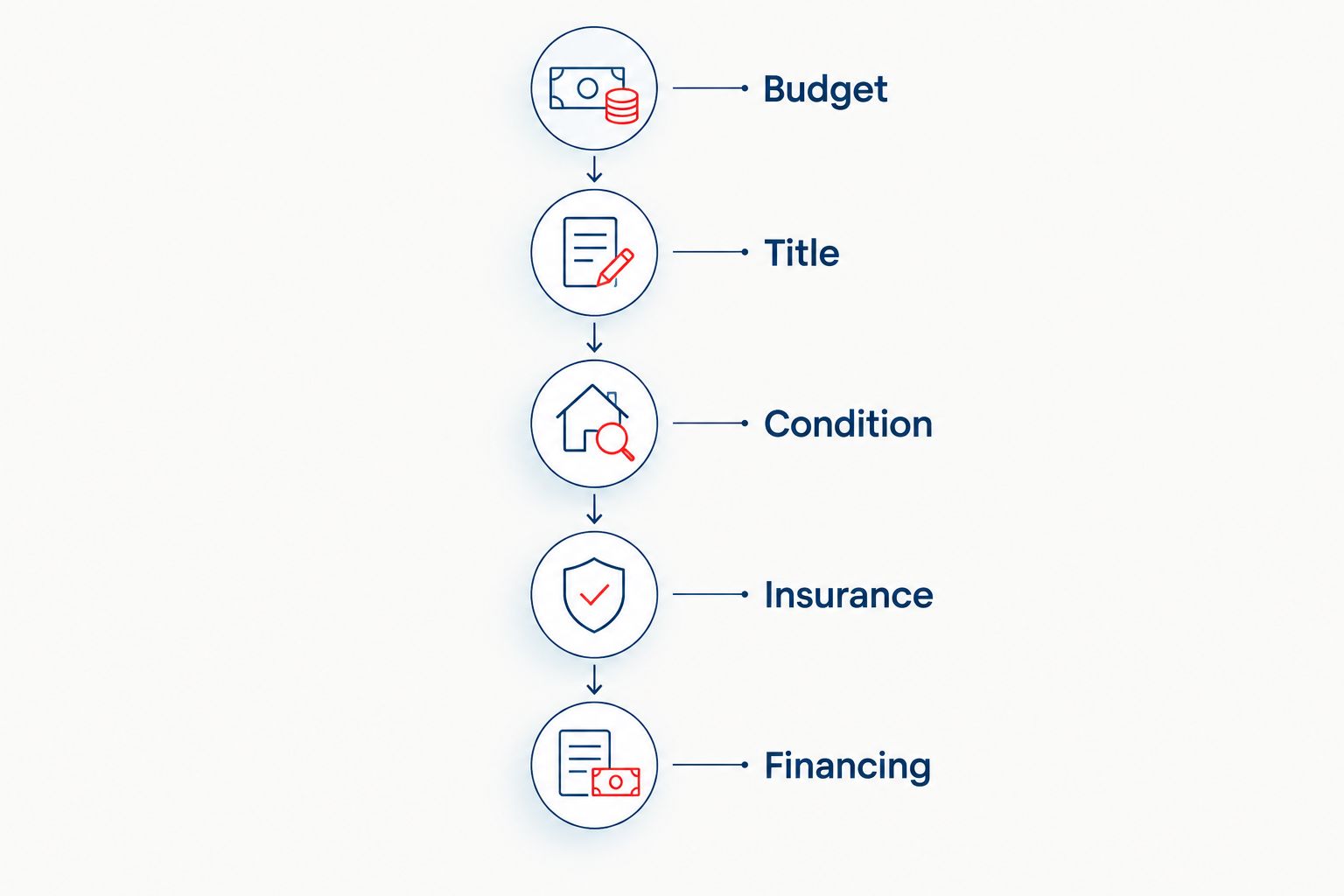
Set your transportation budget before browsing
I would start with a sheet of paper or a basic spreadsheet. Write down dependable income, essential school and living expenses, and the money left for transportation. Keep savings intended for tuition separate from money you can spend on a car.
Then separate the purchase from ownership. Insurance, fuel, maintenance, registration, and parking still need money after you get the keys. If the entire plan depends on nothing breaking, I would lower the purchase budget rather than hope for better luck.
- For a student at UHCL or San Jac Central, a simple, well-maintained car with a cold A/C beats a flashy one with unknown history.
- List insurance, fuel, parking, registration, and maintenance separately.
- Keep repair savings outside your down-payment money.
- Mark which expenses a parent will cover and which belong to you.
Match the vehicle to your normal week
Before comparing listings, I would describe an ordinary school week. Include the distance to class, whether you carry work equipment, how many people regularly ride with you, and where you park. Those answers help separate useful space from space you simply like.
A compact sedan deserves an early look when your main job is getting yourself and a backpack around. A hatchback adds loading flexibility. A compact SUV makes sense when its space solves a regular need, but I would not assume its size automatically makes it the better student purchase.
- Write down your normal campus, work, and home routes.
- Bring the backpack, equipment, or child seat you regularly carry.
- Check visibility and parking comfort from the driver’s seat.
- Separate essential features from preferences before viewing vehicles.
Verify the title and history before committing
At Testarossa Motors, clean title is the blanket vehicle claim. It is not a blanket promise about mechanical condition, past repairs, or future reliability. I would treat title status as the beginning of verification, not the end.
Read why a clean title does not mean a used car has no problems before treating that phrase as a condition report. Compare the vehicle identification number on the vehicle with the paperwork and any records supplied.
- Match the vehicle identification number across the vehicle and documents.
- Ask who holds the title and how ownership will transfer.
- Read supplied history and service records for gaps or inconsistencies.
- Ask about prior damage, water exposure, and known repairs.
- Stop if an important ownership question remains unresolved.
Inspect the engine and transmission before accepting wear
I put engine and transmission condition ahead of cosmetic appeal. A worn seat is visible; the cause of overheating or a shifting complaint needs diagnosis. I would not accept a seller’s guess as the repair plan.
Start with what you can observe, then pay an independent mechanic for the judgment you cannot make yourself. Ask to see the vehicle start from cold, check warning lights, and drive it under suitable conditions. Do not open a hot cooling system or crawl under an unsupported vehicle.
- Observe a cold start when the seller can arrange one.
- Check warning lights and ask about any recent diagnostic work.
- Test acceleration, shifting, braking, steering, and air conditioning.
- Have an independent mechanic inspect the vehicle before commitment.
- Get written repair estimates for problems that affect your decision.
Quote insurance before choosing your favorite
I would get insurance quotes while the shortlist is still open. Use the exact vehicle identification number and explain who will drive, where the car will stay, and how it will be used. A quote built around the wrong details does not settle your budget.
Ask the insurer how living at school, remaining on a household policy, or financing the vehicle affects the proposed coverage. Do not assume a parent’s existing policy automatically covers your new arrangement.
- Request quotes for 3 candidate vehicles before narrowing the list.
- Give the insurer accurate drivers, address, and vehicle details.
- Confirm coverage requirements with any proposed lender.
- Compare deductibles as well as the recurring insurance obligation.
- Include any diagnosed air-conditioning work in your repair plan.
Compare financing without shopping by payment alone
In, I would keep the vehicle decision and borrowing decision on separate pages. First decide whether the car passes your condition and budget checks. Then compare written loan terms for that vehicle.
A bank or credit union is a direct place to ask about borrowing. A dealership can also help you explore financing options, but assistance is not the same as lending.
- Compare the annual percentage rate, term, and total payments.
- Ask which documents the lender requires from you.
- Read any co-signer obligations before anyone signs.
- Confirm which proposed products or services are optional.
- Keep copies of the final agreement and ownership documents.
Decide what to accept and when to walk away
I would accept ordinary wear only after separating it from safety problems and uncertain repairs. A scuffed bumper does not deserve the same response as an unresolved transmission complaint. The difference is whether you understand the problem and can carry its consequences.
A useful buying lesson is to correct the decision, not defend it. Once you like a car, it becomes easy to explain away new concerns. I would return to the written budget and inspection findings instead of spending more simply to avoid starting the search again.
- Accept cosmetic wear only when it fits your expectations.
- Require diagnosis before relying on a repair estimate.
- Walk away from unresolved ownership or safety concerns.
- Recheck the insurance quote against the vehicle you chose.
- Confirm keys and agreed work in writing before handover.
Sedan, hatchback or small SUV for school?
I would compare body styles before chasing a particular badge. Each option below has a useful role and a reason not to choose it. None replaces checking the individual vehicle.
| Option | Best for | Main benefit and limitation |
|---|---|---|
| Compact sedan | Solo commuting and ordinary campus trips | A useful starting point for basic transportation; the trunk opening limits bulky loads. |
| Hatchback | Students who regularly carry awkward items | The rear opening helps with loading; check usable space with your own belongings. |
| Compact SUV | Students who regularly need extra cargo space | Worth considering when the space serves a real need; do not assume its running expenses match a smaller car. |
| Midsize sedan | Students who regularly carry adult passengers | Worth testing for passenger comfort; a larger footprint needs a parking check. |
My first comparison would be a compact sedan against a hatchback. I would add a compact SUV only when the extra space has a clear purpose. An inspected vehicle in sound condition deserves more weight than a preferred body style with unanswered problems.
Common student-buyer mistakes
Spending repair savings on a down payment
A larger down payment does not remove the need for maintenance. I would keep a separate reserve and choose a less demanding purchase if that is what preserves it. Money already committed to tuition is not a repair fund.
Treating a reputation as an inspection
A familiar model name does not tell you how a particular vehicle was maintained. I would judge records, current condition, and inspection findings together. A desirable badge cannot explain an active warning light.
Buying around a temporary work schedule
Extra summer shifts can make a school-year commitment look easier than it is. For the academic year, I would budget around the income you can maintain while attending class. Include any change in who pays for insurance or parking.
Letting a parent’s help remain unclear
Family help works better when the details are explicit. Decide whose name will be on the title, who is borrowing, and who pays when a repair appears. Ask the lender and insurer how that arrangement must be documented.
Ready to see where you stand? You can apply for financing online in a few minutes, then stop by our lot at 521 Hwy 3 in League City to look at clean-title vehicles that have each been inspected three times. Approval depends on the lender, and we’ll walk you through the terms in writing before you sign anything.
Questions we hear a lot
What is the best used car for a college student in Clear Lake?
The best choice is an individually inspected vehicle that fits the student’s regular trips and full ownership budget. Start by comparing a compact sedan and a hatchback, then add larger options only when their space serves a regular need.
Should a college student choose a sedan or an SUV?
Choose based on actual passenger and cargo needs, not the assumption that an SUV is automatically better. Compare insurance, fuel information, condition, and parking comfort for the exact vehicles.
Can I finance a used car while I am in college?
A lender must assess your application under its requirements. Ask about income documents, credit requirements, and co-signer obligations before assuming that student status determines approval.
Does a clean title mean a student car is reliable?
No, a clean title does not establish mechanical reliability. Verify ownership, review any supplied records, and arrange an independent inspection of the vehicle.
Keep reading
- Used cars for first-time buyers in League City
- Whether you need a cosigner
- Whether financing a used car builds credit
- Start your financing application