
Oil and gas workers’ used-truck buying is matching a pickup’s condition and verified capability to the job so you can get to work without taking on avoidable repair risk. For Houston buyers, I would separate the daily commute from actual hauling, towing and site-access requirements before choosing a truck.
The Bay Area plant commute
A lot of folks near League City work at the plants and refineries in Texas City, Pasadena and La Porte, or head out to field sites farther away. That’s early mornings, long highway stretches on I-45 and Hwy 146, and trucks parked all shift in open lots near the water.
Salt air and humidity near the ship channel and the bay speed up rust, so we’d check the frame, brake lines and underbody closely. For high-mileage commuters, transmission service history and tire condition matter more than options.
Every truck we sell has a clean title and has been inspected three times. We’ve served more than 18,000 Texans since 1995, and a lot of them drive to work at those plants.
I’m Deborah Wedemeyer, owner of Testarossa Motors. My buying judgment starts with the engine, transmission and what a repair would mean for the budget—not the badge on the grille. This guide uses that approach whether you buy locally or never visit my dealership.
Why truck selection matters for oil and gas workers
An oil and gas job does not automatically require a heavy-duty diesel. A worker driving to a paved employee lot has a different need from someone carrying equipment or pulling a trailer between locations. Buying for the job title instead of the actual assignment adds complexity without establishing a benefit.
Write down where personal vehicles are permitted and what your employer expects you to carry. Ask about access rules rather than assuming four-wheel drive is required. A pickup cannot make an unsafe or prohibited route acceptable.
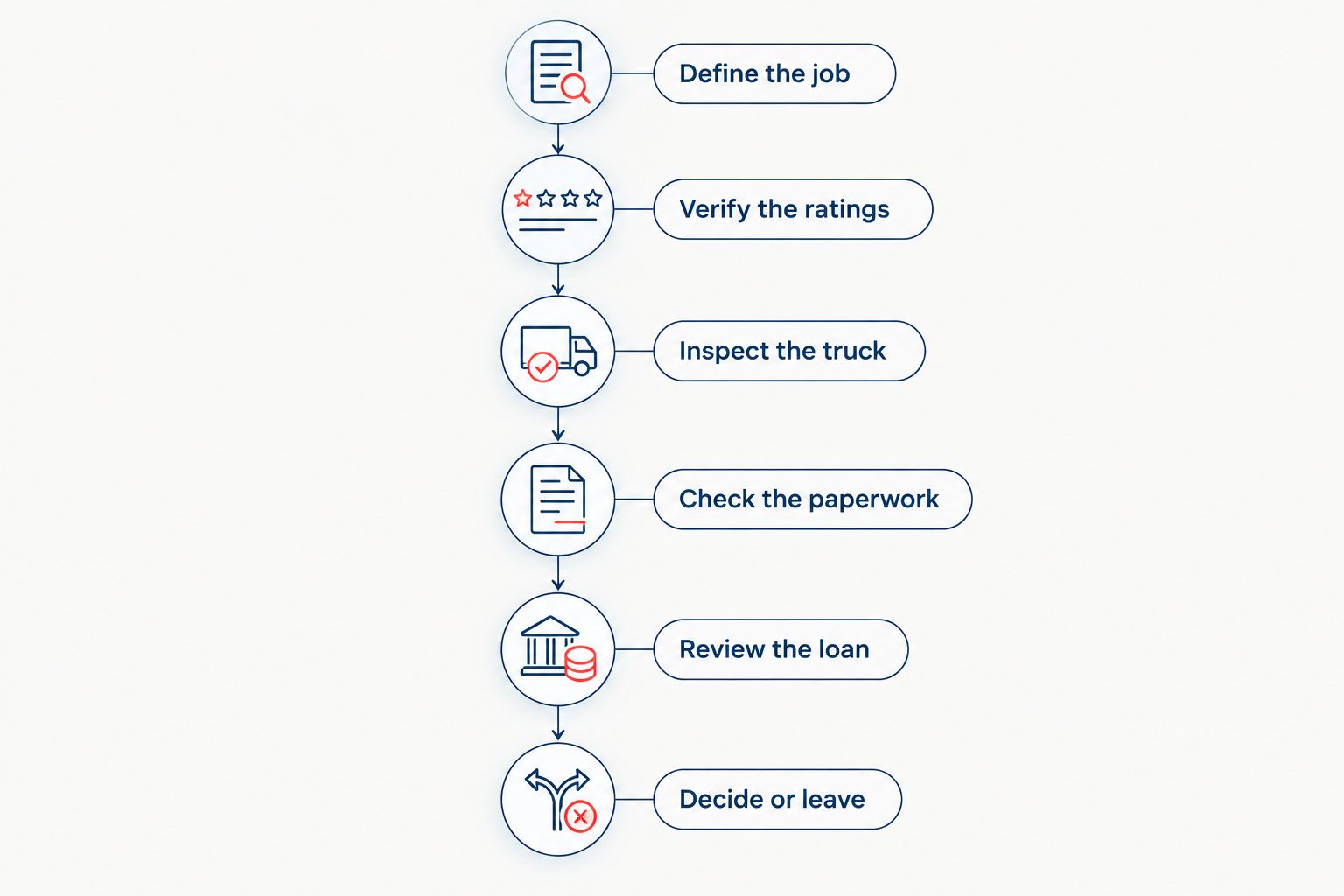
How to choose a truck for plant and field work
Define the job
Start with a written list, not a vehicle listing. Separate the drive to work from tasks you must perform in your own truck. Include family use if the same pickup needs to carry children or other passengers outside work.
- Confirm whether your route is paved, maintained gravel or an approved unpaved access road.
- List passengers, tools, bed storage and other equipment you actually carry.
- Identify any trailer and its expected loaded weight.
- Check employer rules for personal vehicles and equipment transport.
- Decide which cab and bed layout meets work and family needs.
Verify the ratings
Read the truck’s labels and the manufacturer’s information for its exact configuration. A model name, engine badge or hitch does not establish what that particular used truck can carry or tow. Cab, drivetrain, equipment and modifications matter.
- Photograph the vehicle identification number and certification labels.
- Read the tire-and-loading label for the specific truck.
- Match towing information to the engine, drivetrain and other required configuration details.
- Include passengers, tools, accessories and trailer tongue or pin weight in the load assessment.
- Ask a qualified professional to assess modifications that affect loading or towing.
Inspect the truck
Begin with the checks you can do yourself: look underneath, inspect the tires, test the controls and review service documents. Then pay an independent mechanic to investigate the truck before you commit. A seller’s description is not a substitute for that inspection.
- Watch for warning lights, leaks, smoke and abnormal engine noises.
- Check transmission engagement and shifting during a safe road test.
- Have the mechanic inspect steering, brakes, suspension, frame and tires.
- Test air conditioning, lights, locks and other equipment you depend on.
- Look for corrosion, water intrusion and poorly executed wiring or modifications.
- Review engine-hour information when provided, alongside mileage and service records.
Check the paperwork
Compare the identification number on the truck with the ownership and sale documents. Review any history information alongside service records and physical findings. None of these checks replaces the others.
- Match vehicle identification numbers across the truck and documents.
- Confirm the seller’s authority to sell and how any lien will be handled.
- Read title information rather than relying on a listing headline.
- Compare mileage entries and service dates for inconsistencies.
- Put promised repairs and included items in the written agreement.
Review the loan
Start with your own budget and obtain written lending terms before comparing payments. A longer loan can lower a payment while increasing total borrowing costs. Approval answers whether a lender will offer credit; it does not establish whether the truck fits your household budget.
- Compare annual percentage rate, loan term and total payments.
- Ask for the written out-the-door total and an itemized explanation of charges.
- Get an insurance quote for the specific truck before signing.
- Review optional products separately from the vehicle and loan decision.
- Base affordability on income you can document and reasonably depend on.
- Keep funds for identified repairs and routine maintenance.
Decide or leave
Bring the job requirements, inspection findings, paperwork and loan terms together. A truck should pass every category that matters to your use. A comfortable cabin does not cancel a payload shortfall, and a manageable payment does not resolve an engine concern.
- Buy only after capability, condition, ownership and financing checks are complete.
- Obtain written estimates for repairs you intend to accept.
- Resolve discrepancies before signing or paying.
- Leave when the seller refuses a reasonable independent inspection.
- Keep copies of inspection findings and signed documents.
Mistakes we see from field workers
Buying for an assignment that is not confirmed
A future towing job is not the same as a current requirement. I would verify employer expectations before accepting the expense and size of a different truck configuration. Buy for established needs, with deliberate room for changes you can explain.
Treating low mileage as proof of light use
Mileage does not describe every part of a truck’s working life. Where engine-hour information exists, review it with the records and inspection. Do not apply a homemade conversion from hours to miles or condemn a truck from one reading.
Overlooking what stays in the truck
Toolboxes, passengers and permanently carried equipment belong in the load calculation. A truck checked while empty still needs assessment for its actual work load. Write the load list before deciding that the bed has enough room.
Using uncertain income to justify the payment
Overtime and assignment income deserve careful treatment when you commit to a fixed payment. I would test the budget against dependable income and retain repair funds. A lender’s approval does not remove your responsibility for ongoing costs.
Excusing an unresolved problem as work-truck wear
Scratches and seat wear are different from overheating, shifting faults or structural concerns. The lesson I apply is to separate a known repair from an unknown problem. Accept wear consciously; do not accept an unexplained major symptom because the truck looks useful.
Cab, bed and drivetrain choices
These are configuration choices, not recommendations for specific vehicles. Best for means best matched to the task—not automatically the most dependable truck. Condition and verified ratings remain the deciding factors within every row.
| Option | Best for | Main benefit and limitation |
|---|---|---|
| Light-duty gasoline pickup | Commuting with tools and loads within verified ratings | Meets lighter-duty needs without choosing a heavy-duty configuration; capability still needs checking. |
| Heavy-duty gasoline pickup | Buyers whose verified loads require a heavier-duty truck | Worth considering for the required load; size and everyday use remain trade-offs. |
| Heavy-duty diesel pickup | Buyers whose towing needs justify evaluating a diesel | A candidate for demanding trailer work; engine and emissions-system condition need specialist inspection. |
| Two-wheel-drive pickup | Paved routes and approved access that does not require four-wheel drive | Avoids choosing four-wheel drive without a need; unsuitable where traction requirements demand otherwise. |
| Four-wheel-drive pickup | Approved routes with a confirmed traction requirement | Adds a traction option; does not replace suitable tires, safe access or load limits. |
I would not recommend gasoline or diesel from mileage alone. The engine’s service history, current condition and intended work carry more weight than a broad fuel-type argument. Ask the inspecting shop about the systems fitted to the exact vehicle.
Ready to see where you stand? You can apply for financing online in a few minutes, then stop by our lot at 521 Hwy 3 in League City to look at clean-title vehicles that have each been inspected three times. Approval depends on the lender, and we’ll walk you through the terms in writing before you sign anything.
Questions we hear a lot
What should I check first when buying a used truck for oil and gas work?
Define the job before choosing the truck. Confirm access requirements, passengers, equipment and any loaded trailer, then verify that the specific truck meets those needs.
Do oil and gas workers in Houston need a diesel truck?
An oil and gas job title does not establish a need for diesel. Compare the actual towing and hauling requirements with the truck’s verified capability, condition and maintenance needs.
Is four-wheel drive necessary for field work?
Four-wheel drive is necessary only when your confirmed access requirements call for it. Ask about employer and site rules, and do not treat four-wheel drive as permission to use an unsafe route.
Is a clean-title used truck free of problems?
A clean title does not establish that a truck is mechanically sound or free of past damage. Review ownership information, service records and an independent inspection separately.
Keep reading
- Used trucks for sale in Houston
- How many miles used cars typically last
- Used-truck insurance costs in Texas
- Start your financing application