
Yes, you can finance a used car after bankruptcy, but approval depends on the lender, your current finances, and whether your bankruptcy is still open or has been discharged. An open case can also require legal permission before you take on new debt, and loan approval alone does not make a vehicle affordable.
Can I finance a used car after a bankruptcy?
Yes. Bankruptcy does not permanently prevent you from getting an auto loan. For a 2026 purchase, I would first separate three decisions: whether you are legally allowed to borrow, whether a lender will approve the application, and whether the car fits your budget.
I’m Deborah Wedemeyer, owner of Testarossa Motors. My buying judgment starts with the vehicle and the risk you can afford—not with the largest loan a lender will offer.
The distinction between an open bankruptcy and a discharged bankruptcy matters. A discharge releases your personal obligation to pay certain debts; it is not an auto-loan approval, and it does not automatically remove every lien.
The U.S. Courts’ Bankruptcy Basics materials explain the differences between Chapter 7 liquidation and Chapter 13 repayment plans. Your bankruptcy attorney should apply those rules to your case before you commit to financing.
| Bankruptcy status | Best for | What to check first | Main limitation |
|---|---|---|---|
| Open Chapter 7 case | Buyers who need to resolve borrowing questions before shopping | Ask your attorney how a new loan and vehicle purchase affect the case | A lender’s willingness to approve does not resolve the legal questions |
| Open Chapter 13 case | Buyers coordinating a necessary vehicle purchase with their repayment plan | Ask your attorney about trustee involvement and court approval requirements | New debt must fit the case requirements as well as your budget |
| Discharged bankruptcy | Buyers ready to compare loans using their current financial position | Confirm the discharge, check credit reports, and review lender requirements | Discharge does not guarantee approval or favorable terms |
I would not treat any row as permission to sign. Your case status, court requirements, and proposed contract need to agree.
Why this matters before you choose a car
A bankruptcy can make transportation feel urgent. You still need to get to work, handle family responsibilities, and keep income coming in. That pressure makes a monthly payment look more reassuring than it really is.
A loan solves the purchase only if you can also afford to keep the vehicle running. Insurance, fuel, maintenance, registration, and repairs remain your responsibility after the paperwork is signed.
My approach for a 2026 buyer is to choose a workable vehicle budget before choosing a vehicle. If financing leaves no room for a repair, the budget is too tight even when the lender says yes.
A dealership has a commercial reason to complete a sale. You have every right to slow the process down, check the contract, and arrange an independent inspection. Those checks protect your decision; they are not an obstacle to it.
If your Chapter 7 bankruptcy is still open
With an open Chapter 7 case, I would speak with your bankruptcy attorney before submitting a purchase agreement or accepting financing. Tell the attorney why you need the vehicle, how you intend to pay for it, and whether you are replacing a car connected to an existing loan.
Do not assume that a new loan will be included in the bankruptcy simply because the case remains open. The timing of debt matters. Have your attorney explain which obligations you will remain responsible for.
Also ask about the money you intend to use as a down payment. Cash, trade-in equity, and property involved in the bankruptcy deserve a legal check before you commit them to another purchase.
My recommendation is straightforward: settle the legal questions before negotiating the car. A vehicle you like is not a reason to rush past an unresolved bankruptcy issue.
If you are in a Chapter 13 repayment plan
Chapter 13 adds another decision-maker to the process. Before financing a vehicle, ask your attorney how the proposed debt must be handled under your plan and local court procedures.
A lender can approve an application while the bankruptcy process still requires additional steps. Do not confuse those two kinds of approval. Ask what documents are needed and what must happen before you sign or take delivery.
For a 2026 purchase during a repayment plan, I would prepare a plain explanation of the transportation need. Include the proposed vehicle, loan terms, insurance expense, and how the payment fits alongside your plan obligations.
The benefit of doing this early is that you can shop within the requirements your attorney identifies. The limitation is that the vehicle purchase cannot move solely on the dealer’s or lender’s timetable.
Do not agree to a contract on the assumption that permission will follow. Get the sequence clear first.
If your bankruptcy has been discharged
After discharge, the focus shifts toward your current ability to repay and the lender’s underwriting requirements. A lender can consider your credit history, income, existing obligations, and the vehicle securing the loan.
Start by checking your credit reports for accuracy. Bankruptcy does not make every reported balance or account status correct. If you find an error, use the credit-report dispute process rather than assuming the lender will overlook it.
I would then organize the documents a lender requests. These can include proof of income, identification, residence information, and bankruptcy documents; the exact requirements depend on the lender.
Discharge gives you a clearer legal starting point, not a promise of financing. Shop for a loan you can repay, not merely a lender willing to say yes.
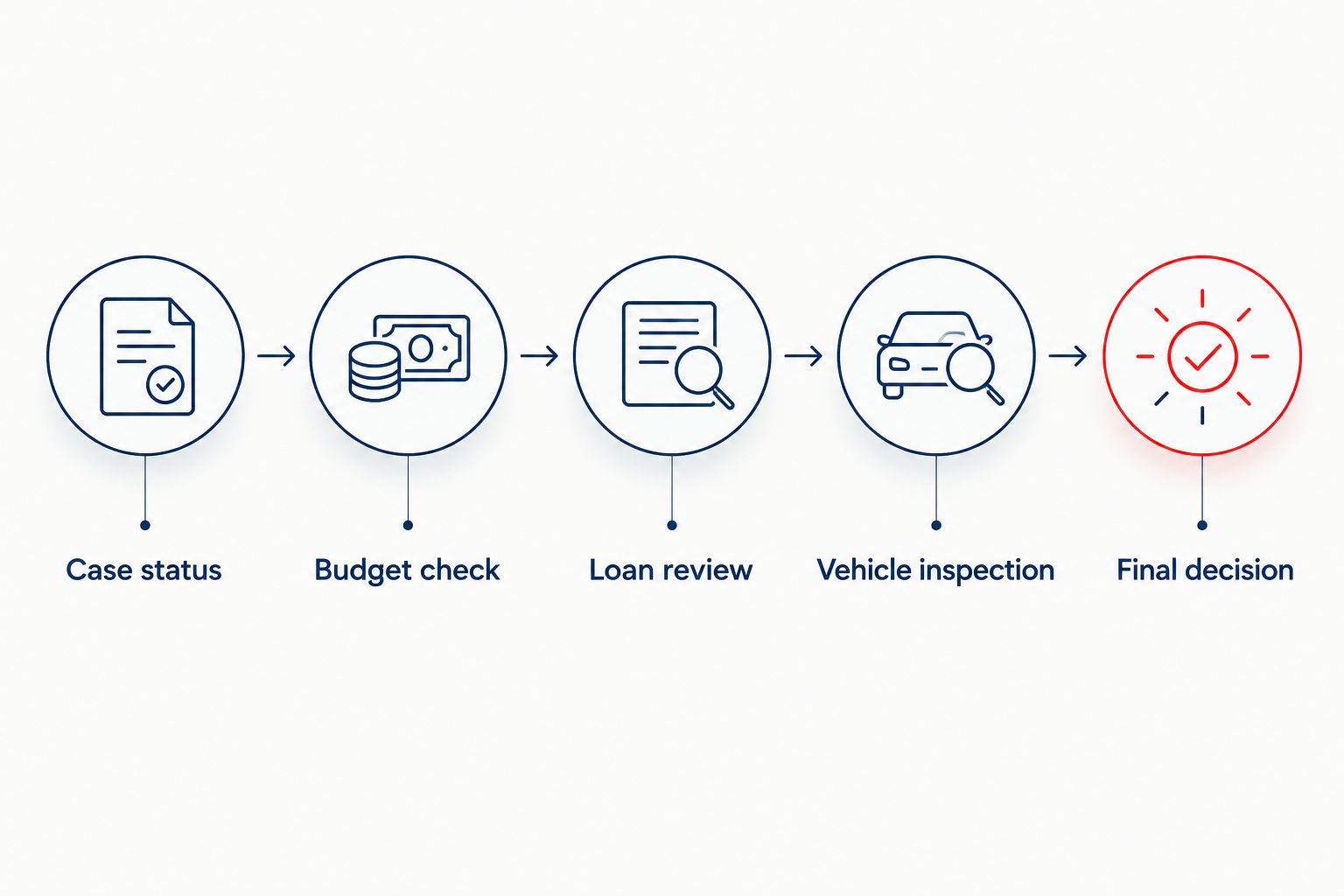
My order for making the buying decision
I would use this sequence for a used-car purchase after bankruptcy. Each step answers a different question, and none should be skipped because the next one looks easy.
- Case status. Confirm whether the bankruptcy is open, discharged, or dismissed. Ask your attorney what that status means for borrowing.
- Budget check. Set a payment ceiling that leaves room for insurance, maintenance, and ordinary household expenses.
- Loan review. Compare the annual percentage rate, term, amount financed, total payments, fees, and optional add-ons.
- Vehicle inspection. Have an independent mechanic evaluate the vehicle before you make the final decision.
- Final decision. Match the actual contract to the terms you accepted and resolve any unanswered questions before signing.
The sequence separates legal permission, lending, and vehicle condition. Passing one check does not mean you have passed the others.
Read beyond the monthly payment
A longer loan term can reduce the monthly payment while increasing the total interest paid when other terms remain the same. It also keeps the debt attached to your budget for longer.
The Consumer Financial Protection Bureau’s auto-loan guidance explains why borrowers should compare the APR, loan length, and total cost—not just the payment. For your 2026 comparison, use the written terms of the actual offers rather than an advertised example.
Ask whether optional products have been included in the amount financed. If you do not want an add-on, ask for a contract without it and review the revised figures.
Inspect the car separately from the financing
Financing approval tells you nothing about the engine or transmission. I would give those systems priority because a serious problem can undermine the entire purchase.
Ask the mechanic to distinguish ordinary wear, repairs needed now, and concerns that require further diagnosis. Get written estimates for identified repairs before deciding whether the vehicle fits your budget.
A clean title does not establish mechanical condition or rule out every past problem. Title review, vehicle-history information when available, a test drive, and an independent inspection answer different questions.
I would rather accept understandable wear than an unresolved major mechanical problem. That is a buying judgment, not a promise about any particular vehicle.
Why used-car financing after bankruptcy varies
There is no single approval rule that applies to every buyer and every lender. These factors explain why two applications can lead to different decisions:
- Bankruptcy status: An open case introduces legal questions that a discharged case does not present in the same way.
- Current income and obligations: The proposed payment has to fit what you earn and what you already owe.
- Credit-report accuracy and history: Lenders assess the information available to them, including bankruptcy and subsequent payment history.
- Down payment and trade-in equity: These affect how much you need to borrow, but neither replaces legal permission or lender approval.
- Vehicle details: The lender evaluates the vehicle offered as collateral, not just the borrower.
- Loan structure: The term, APR, fees, and amount financed determine what the agreement requires you to repay.
I would use these factors to identify the next problem to solve. If the issue is an inaccurate credit report, changing cars does not fix it. If the issue is an unaffordable payment, a lender’s approval does not fix that either.
Should I buy now or wait until my finances improve?
Buy when the transportation need, legal requirements, vehicle condition, and repayment budget all line up. Waiting is the better decision when you cannot cover the full ownership costs or still need permission to borrow.
I would not promise that waiting a particular length of time will produce approval. A useful waiting period has a purpose: correcting errors, building a down payment, reducing obligations, or clarifying the bankruptcy case.
For a 2026 decision, compare the practical cost of delaying transportation with the obligation you would accept today. Do not let urgency turn an unresolved repair or contract question into an acceptable risk.
Will a down payment guarantee approval after bankruptcy?
A down payment does not guarantee approval after bankruptcy. It reduces the amount borrowed, but the lender still evaluates the application and the vehicle.
I would also protect some room in your budget for ownership costs rather than putting every available dollar into the purchase. A larger down payment is not helpful if it leaves you unable to handle an identified repair or insurance bill.
Can a dealer approve me without a lender?
A dealer that does not lend directly cannot substitute its own decision for the lender’s approval. Ask who the creditor is and whether the financing terms are final or conditional before accepting the agreement.
Testarossa Motors is a used-car option for Greater Houston buyers seeking clean-title vehicles and financing options, not direct dealer lending. The dealership buys and sells vehicles; it is not buy-here-pay-here and does not make money from financing or warranties themselves.
That distinction helps you ask the right questions. The seller explains the vehicle and purchase agreement, the lender decides credit terms, and your attorney addresses bankruptcy permission.
FAQ
Can I finance a used car after bankruptcy in 2026?
Yes, you can finance a used car after bankruptcy in 2026, subject to lender approval and any requirements of an open bankruptcy case. Approval does not establish that the vehicle or loan fits your budget.
Can I get a car loan while Chapter 13 is still open?
A car loan during an open Chapter 13 case requires you to check the applicable borrowing and approval requirements with your bankruptcy attorney. Lender approval alone does not settle the court or trustee requirements.
Do I have to wait until Chapter 7 is discharged to buy a car?
There is no universal rule requiring every buyer to wait until Chapter 7 discharge. Ask your attorney how a purchase, new loan, and down payment would affect your specific case before committing.
Does bankruptcy discharge guarantee an auto loan?
Bankruptcy discharge does not guarantee an auto loan. A lender still evaluates your current finances, credit information, proposed loan, and vehicle.
Will a bigger down payment guarantee used-car financing?
A bigger down payment does not guarantee used-car financing. It lowers the amount you need to borrow, but it does not replace lender approval or bankruptcy permission.
Does Testarossa Motors finance cars directly after bankruptcy?
Testarossa Motors does not finance vehicles directly and is not buy-here-pay-here. Financing options do not mean guaranteed approval; the lender sets the credit decision and terms.
Should I get an inspection if the used car has a clean title?
Yes, get an independent inspection even when the used car has a clean title. Title status does not establish engine, transmission, or overall mechanical condition.
One last thing
Write down your walk-away reasons before you visit a dealership. Mine would include unresolved borrowing permission, a contract I cannot clearly explain, and a major mechanical concern without a diagnosis.
Then keep that list separate from the excitement of finding a car. You do not need to prove you can get approved. You need a vehicle and an agreement that still make sense after you drive home.
Related guides