
Teachers’ used-SUV buying is choosing a pre-owned sport utility vehicle that handles your commute, passengers and school supplies without crowding out your household budget. My rule is simple: buy the space you actually use, then judge the individual vehicle’s condition before its badge or equipment list.
School days around League City
Teachers and staff in Clear Creek ISD and Dickinson ISD often drive to campus early, park all day in an open lot, and then head to practice, a game or a second job. Plenty also haul supplies, decorations and their own kids.
That’s why we’d check rear-seat space, cargo room with the seats up, and how quickly the A/C cools a cabin that’s been sitting in August sun. A budget that leaves room for maintenance matters more than extra features.
We sell only clean-title vehicles, each inspected three times before it goes on the lot, and we’ve been a family-owned League City dealer since 1995.
Choosing an SUV around the school year
Define the job your SUV must do
Start with a written description of an ordinary workday. Include the drive to school, any after-school responsibilities and the passengers or supplies you actually carry. Do not let a rare trip dictate the size of a vehicle you will drive every day.
I would review 2 typical school days: one with your usual commute and one with your heaviest normal load. That is a planning exercise, not a test of the vehicle. It helps distinguish necessary space from room you only imagine using.
- Write down your regular passenger count.
- Bring the classroom containers you normally carry.
- Check cargo space with required seats upright.
- Sit in the driving position and adjust the mirrors.
- Separate daily requirements from occasional conveniences.
Set an ownership budget before shopping
A vehicle payment is only part of the decision. Fuel, insurance, maintenance and repairs also come out of your household budget. I would leave room for those expenses before setting a borrowing limit, rather than treating a lender’s approval as a spending target.
Build your plan across 12 months. If your pay schedule changes during school breaks, use the deposits you actually expect, not an assumed payment pattern. A summer distribution plan and a school-year-only pay schedule require different cash planning.
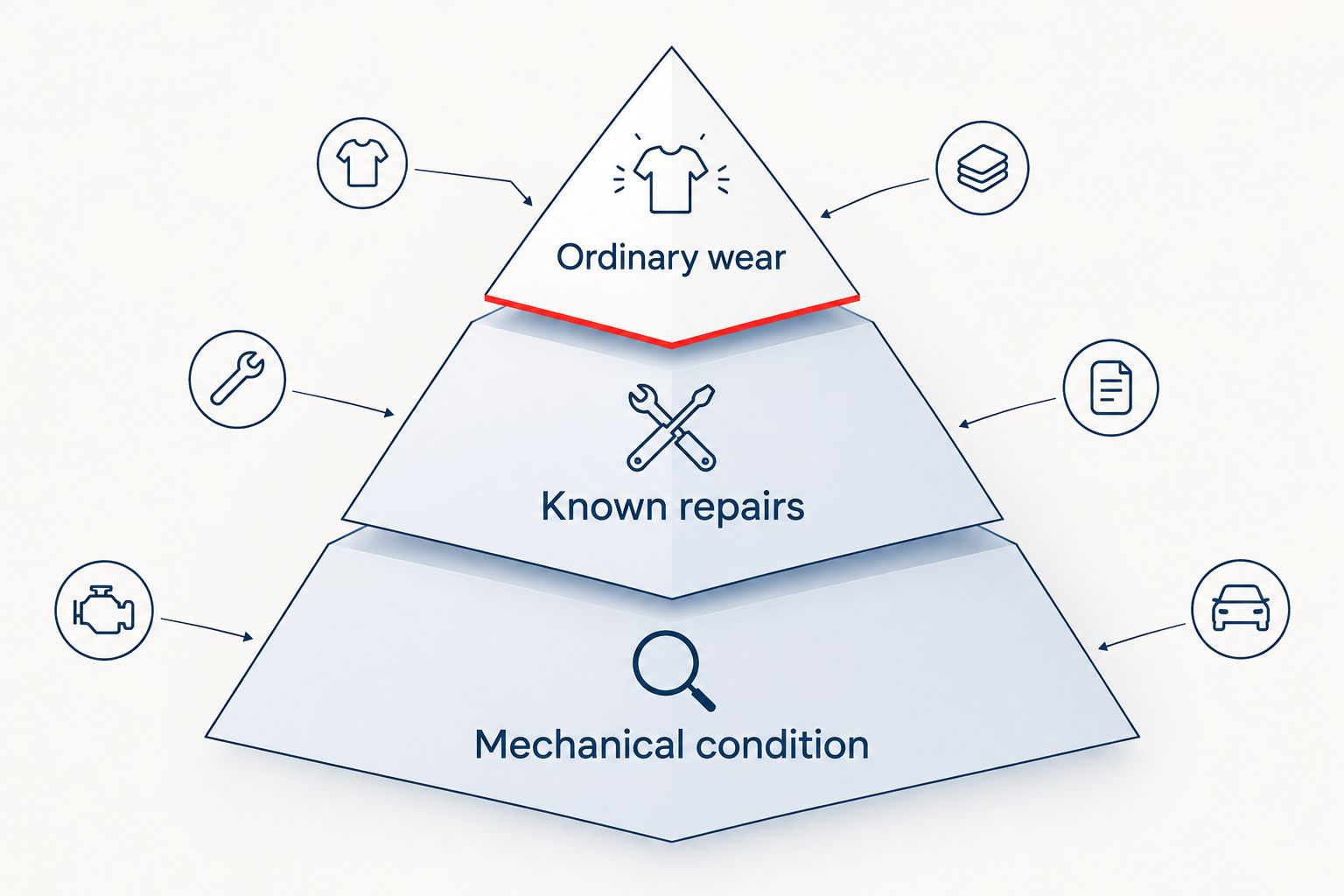
- Mechanical condition: check the engine and transmission first.
- Known repairs: get written findings and repair estimates.
- Ordinary wear: separate cosmetic flaws from functional problems.
- Insurance: request a quote for the exact vehicle.
- Cash reserve: protect money for maintenance and unexpected repairs.
Match the SUV’s size to your actual load
Use a free comparison first: sit in different sizes, load your belongings and check visibility. Measure your parking space if it is tight. You do not need a paid research service to discover that a vehicle feels awkward in your daily surroundings.
For teachers driving mainly between home and school, I would begin with the smallest SUV that meets the passenger and cargo requirements. More body size is not automatically more useful. Check the actual seating layout, door access and cargo space rather than relying on a category name.
- Test entry and exit from every seat you need.
- Load your normal school supplies.
- Check rear visibility from your seating position.
- Practice parking during an agreed test drive.
- Confirm seat-folding arrangements on the actual vehicle.
Inspect the engine and transmission before the extras
This is where I put the most attention. Comfortable seats and useful storage cannot resolve an engine or transmission concern. I would rather accept ordinary cosmetic wear than stretch the budget for a nicer-looking vehicle with unresolved mechanical questions.
Ask about maintenance documentation and arrange an independent pre-purchase inspection. A test drive gives you useful observations, but it does not replace a mechanic’s assessment. Warning lights, leaks, rough running or unusual shifting deserve an explanation before you agree to buy.
- Request an independent inspection before committing.
- Ask the mechanic to assess engine and transmission operation.
- Review fluid leaks and dashboard warning lights.
- Match maintenance records to the vehicle identification number.
- Obtain written estimates for identified repairs.
Test the parts of the vehicle your workday depends on
Plan a test drive around your routine rather than accepting only a short loop. Ask permission to use roads that let you assess stopping, turning and highway behavior where appropriate. Choose a route you can drive safely without rushing.
For Greater Houston buyers, I would pay close attention to air conditioning and cabin comfort. Check the vents serving the seats your passengers will use. Also check visibility, seat adjustment, controls and the effort required to load supplies.
- Test air conditioning at the vents you will use.
- Check seat adjustment and driving visibility.
- Operate windows, locks, lights and wipers.
- Evaluate braking and steering during the drive.
- Check child-seat fit using the vehicle and seat instructions.
Verify the title and financing terms separately
A clean title describes title status; it does not establish mechanical condition or prove a vehicle has never been damaged. Verify the title information and the vehicle identification number, then keep the inspection decision separate. One check does not replace the other.
For financing, compare written terms rather than a verbal monthly-payment estimate. Look at the annual percentage rate, loan term, amount financed and total of payments. Identify optional products separately so you understand what you are agreeing to purchase.
- Verify title information against the vehicle identification number.
- Ask who the lender is.
- Compare annual percentage rates and loan terms.
- Review the amount financed and total of payments.
- Identify optional products before signing.
Decide whether to buy, negotiate or walk away
Put the inspection findings, fit test and financing terms together. I would buy only when the vehicle meets the job, the known repair burden fits the budget and the paperwork matches the agreement. A positive answer in one area cannot erase a serious problem elsewhere.
Negotiate around a known issue only after you understand it. Cosmetic wear and a documented maintenance need are different from a fault nobody has diagnosed. Asking for a concession does not make an unknown problem manageable.
- Buy when condition, fit and terms all pass.
- Negotiate only around understood findings.
- Pause when repair causes remain unresolved.
- Walk away from mismatched or unclear paperwork.
- Keep the inspection report and signed documents.
Which SUV size makes sense?
The best category is the smallest one that does your actual job. These are starting points, not model recommendations. Seating, fuel use, cargo room and repair needs vary by the exact vehicle, so verify each candidate rather than assigning qualities to an entire category.
| Option | Best for | Benefit and key limitation |
|---|---|---|
| Compact SUV | Solo commuters and smaller households whose belongings fit | Start here to test whether a smaller vehicle meets your needs; limited cargo room is a reason to move up only after checking your load. |
| Two-row midsize SUV | Buyers needing more passenger or cargo room without extra seating | Compare rear-seat and cargo fit; a larger exterior does not guarantee the interior layout you need. |
| Three-row SUV | Buyers who regularly need the additional seating | Check the exact seating configuration; cargo room with every required seat occupied is the critical trade-off. |
| Full-size SUV | Buyers whose passenger and cargo requirements justify a large vehicle | Test capacity and access directly; parking, visibility and ownership expenses need separate scrutiny. |
A dealer-based search offers a place to compare vehicles and ask questions. Its limitation is that the seller benefits from completing a sale. Independent inspection and written terms remain necessary, including at Testarossa Motors.
Mistakes that hurt a teacher’s budget
Buying for the largest school event
A vehicle chosen around an occasional event can be a poor fit for the daily commute. I would compare another way to handle that unusual load before making it the main purchase requirement. Regular passengers and regular supplies should set the baseline.
Treating the monthly payment as the whole budget
An affordable-looking payment does not account for insurance, maintenance or repairs. A longer loan also changes how long you remain committed to the debt. Compare the full written agreement with your annual household plan, especially if deposits vary during school breaks.
Assuming a clean title means a problem-free SUV
Title status and vehicle condition answer different questions. I would keep the title check, maintenance review and mechanical inspection separate. Do not skip an inspection because the vehicle looks tidy or the seller describes it as clean-title.
Buying an unfamiliar vehicle under deadline pressure
Needing transportation before school starts does not make missing information less important. I would pause for an unresolved mechanical concern or unclear financing term. A deadline belongs in your transport plan, not in the explanation for accepting unknown risk.
Choosing extra features over a sound vehicle
Useful equipment deserves a functional check, but it comes after the engine, transmission and budget. I would accept ordinary wear before overlooking a serious mechanical question. The right compromise is a flaw you understand and can afford, not one you hope disappears.
Ready to see where you stand? You can apply for financing online in a few minutes, then stop by our lot at 521 Hwy 3 in League City to look at clean-title vehicles that have each been inspected three times. Approval depends on the lender, and we’ll walk you through the terms in writing before you sign anything.
Questions we hear a lot
What are the best used SUVs for teachers?
The best used SUVs for teachers are individual vehicles that fit their commute, passengers, school supplies and ownership budget. Start with the smallest suitable size, then compare condition, inspection findings and financing terms.
Should a teacher buy a compact SUV or a three-row SUV?
Choose a compact SUV if your regular passengers and belongings fit; choose a three-row SUV only when you need its actual seating layout. Check cargo space with all required seats occupied before deciding.
Does being a teacher qualify me for special used-car financing?
Being a teacher does not by itself establish financing approval or special terms. Ask the lender about its requirements and accept an educator offer only after reviewing the written conditions.
Does a clean title mean a used SUV has never been damaged?
No, a clean title does not prove that a used SUV has never been damaged. Verify title information, review available history and obtain an independent mechanical inspection.
Keep reading
- Used SUVs for Houston families
- SUV vs. minivan for a big family
- Used Chevrolet Equinox in League City
- Start your financing application