

Best overall: Chevrolet Silverado 1500 crew cab. Best for easier parking: Chevrolet Colorado. Best budget approach: an older Silverado 1500 regular cab with verified mechanical condition. When comparing Chevy trucks for sale in League City in 2026, I would choose the truck that fits your actual work, then reject any example whose condition or paperwork fails inspection.
Why the buying decision matters
A pickup can be the right model and still be the wrong purchase. Engine trouble, transmission trouble, questionable repairs, or a financing agreement that strains your budget can outweigh a useful cab and bed.
I’m Deborah Wedemeyer, owner of Testarossa Motors. Since 1995, the dealership has independently bought more than 18,000 used vehicles. My advice here comes from the buying side: decide what risk you can accept before deciding which truck you want.
For Greater Houston buyers, that means separating ordinary wear from expensive uncertainty. A worn seat is visible. An intermittent shift problem takes more work to understand. Neither a familiar Chevrolet badge nor a clean title replaces that work.
What makes the best used Chevy truck?
These are the criteria I would use for a 2026 shopping shortlist. They rank the suitability of each truck type, not the condition of an individual vehicle.
- Mechanical condition: Put engine and transmission condition ahead of trim, accessories, and appearance.
- Actual workload: Match passengers, cargo, trailer weight, and parking needs to the truck’s exact configuration.
- Repair exposure: Separate documented repair needs from faults that remain unexplained. An unknown problem is not a known expense.
- Title and history: Match the paperwork to the vehicle and investigate accidents, water exposure, and repairs independently.
- Budget fit: Consider the purchase commitment, insurance, fuel, maintenance, and a repair reserve together.
- Configuration: Verify cab, bed, drivetrain, engine, and equipment on the specific truck rather than assuming the model name settles them.
My default is the least complicated truck that meets your needs and passes inspection. Buying more truck than you need does not make mechanical uncertainty easier to accept.
Used Chevrolet trucks at a glance
These are model-and-body-style recommendations, not claims about current inventory. Equipment and capabilities differ by model year and configuration; confirm every detail on the truck you inspect.
| Rank and option | Best for | Standout reason to consider it | Key limitation |
|---|---|---|---|
| 1. Chevrolet Silverado 1500 crew cab | Daily driving with passengers and occasional truck work | Full-size pickup layout with a separate rear seating area | Larger footprint than a midsize pickup |
| 2. Chevrolet Colorado | Buyers prioritizing a smaller pickup | Midsize alternative to a full-size Silverado | Less space for some passenger and cargo needs |
| 3. Chevrolet Silverado 2500 HD | Buyers whose verified workload requires heavy-duty capability | Heavy-duty platform for configuration-specific work | Unnecessary size and complexity for light-duty errands |
| 4. Chevrolet Silverado 3500 HD | Buyers whose load requirements exceed suitable 2500 HD configurations | Another heavy-duty option to evaluate against documented loads | Requires especially careful configuration and usage checks |
| 5. Older Chevrolet Silverado 1500 regular cab | Budget-focused buyers who do not need rear seating | Simpler seating layout for a work-first purchase | No separate rear passenger row; age-related repairs need scrutiny |
1. Chevrolet Silverado 1500 crew cab: best for mixed daily use
The Chevrolet Silverado 1500 crew cab is my first shortlist choice when you need a pickup for passengers, household tasks, and occasional hauling. Its separate rear seating area makes it a more practical starting point than a regular cab when people regularly ride with you.
That is a fit recommendation, not a reliability guarantee. I would compare individual trucks by service documentation, engine behavior, transmission operation, and inspection findings before comparing trim names.
Chevrolet Silverado 1500 crew cab pros:
- Separate rear seating supports passenger use.
- A full-size pickup layout suits a mix of personal and truck duties.
- Different configurations let you shop around your actual requirements.
Chevrolet Silverado 1500 crew cab cons:
- Its full-size footprint requires a parking and garage check.
- The model name alone does not establish towing capacity or equipment.
- A comfortable cabin does not compensate for drivetrain faults.
Best for: A buyer who regularly carries passengers and needs a pickup without a documented heavy-duty requirement.
On the test drive, I would check transmission behavior both before and after the truck warms up. I would also have an independent mechanic investigate leaks, warning lights, and unusual noises rather than accepting an explanation without evidence.
Verdict: Buy a Chevrolet Silverado 1500 crew cab when its configuration fits your use and inspection supports the purchase.
2. Chevrolet Colorado: best for a smaller pickup
The Chevrolet Colorado is the midsize option on this list. I would start here when a full-size truck feels cumbersome and your cargo or trailer requirements do not demand something larger.
For a 2026 purchase, test the Colorado against your real routine. Sit in the rear seat if passengers will use it, check the bed against the items you carry, and try the parking spaces you use most often.
Chevrolet Colorado pros:
- A smaller footprint makes it a useful alternative to a Silverado.
- It provides a pickup bed without moving into the full-size category.
- It gives buyers a distinct option when size matters more than maximum capability.
Chevrolet Colorado cons:
- Cabin and bed space require a careful fit check.
- A midsize badge does not establish towing suitability.
- A smaller truck still needs the same mechanical scrutiny as a larger one.
Best for: A buyer who needs a pickup but places daily maneuverability ahead of full-size space.
I would not assume that smaller automatically means cheaper to own. Compare the actual vehicle’s condition, tires, service needs, insurance quote, and financing terms. A neglected Colorado is not a better budget decision than a sound Silverado simply because it occupies less driveway.
Verdict: Buy a Chevrolet Colorado when the smaller layout meets your passenger, cargo, and towing requirements.
3. Chevrolet Silverado 2500 HD: best for verified heavy-duty work
The Chevrolet Silverado 2500 HD belongs on your shortlist when the work—not the appearance—requires a heavy-duty pickup. Before shopping, write down what you carry and what you tow, including passengers, equipment, and trailer tongue weight.
Then check the specific truck’s ratings and configuration. I would not treat an HD badge as permission to carry or tow an unspecified load.
Chevrolet Silverado 2500 HD pros:
- Its heavy-duty role makes it relevant to demanding workloads.
- It offers a different capability category from the Silverado 1500.
- Configuration-specific ratings provide a basis for matching truck and job.
Chevrolet Silverado 2500 HD cons:
- Size can complicate everyday parking and storage.
- Previous work use makes inspection of wear and modifications essential.
- Diesel-equipped examples require engine-specific service and repair assessment.
Best for: A buyer whose measured workload requires a suitable heavy-duty configuration.
I would ask an independent mechanic to inspect the suspension, brakes, drivetrain, and any towing-related modifications. Evidence of hard use does not automatically disqualify a truck, but unexplained damage or undocumented alterations should stop the decision until they are understood.
Verdict: Hold on a Chevrolet Silverado 2500 HD until its ratings and mechanical condition are verified against your workload.
4. Chevrolet Silverado 3500 HD: best for higher documented load needs
The Chevrolet Silverado 3500 HD is a specialist choice, not my default family pickup recommendation. Consider it when your required load exceeds the ratings of otherwise suitable trucks and a particular 3500 HD configuration meets the requirement.
Some examples have dual rear wheels; others have single rear wheels. Verify the actual configuration rather than assuming every 3500 HD has the same width, equipment, or capability.
Chevrolet Silverado 3500 HD pros:
- It adds another heavy-duty option for demanding load requirements.
- Different rear-wheel configurations serve different needs.
- It supports a workload-first buying decision when lighter choices do not fit.
Chevrolet Silverado 3500 HD cons:
- Dual-rear-wheel examples demand extra attention to clearance and tire condition.
- Previous commercial or towing use needs careful investigation.
- Buying it without a defined workload adds unnecessary purchase complexity.
Best for: A buyer with documented load requirements that call for a suitable Silverado 3500 HD.
In 2026, I would be especially careful about modifications on any heavy-duty truck. Changed suspension components, aftermarket towing equipment, or engine alterations require explanation and inspection. Accessories are not evidence that the underlying truck is ready for your job.
Verdict: Hold on a Chevrolet Silverado 3500 HD until the specific truck proves necessary and suitable.
5. Older Chevrolet Silverado 1500 regular cab: best budget approach
An older Chevrolet Silverado 1500 regular cab is worth comparing when you need a working pickup and do not need a separate rear passenger row. I would focus on a mechanically sound example rather than chasing a particular trim or appearance package.
Older does not automatically mean good value. Deferred maintenance can erase the benefit of a lower purchase commitment, and a regular cab becomes the wrong choice immediately if your passenger needs change.
Older Chevrolet Silverado 1500 regular cab pros:
- Its seating layout suits buyers who do not need a rear row.
- It keeps the shortlist focused on truck duties rather than passenger space.
- Ordinary cosmetic wear can be acceptable when mechanical condition is established.
Older Chevrolet Silverado 1500 regular cab cons:
- Age-related deterioration requires close inspection.
- No separate rear seating limits family use.
- Missing records make repair risk harder to judge.
Best for: A budget-focused buyer who needs a pickup bed, limited passenger seating, and a vehicle that passes independent inspection.
I would accept understandable cosmetic wear before accepting an unexplained engine or transmission fault. A repair estimate should identify the cause and scope of the work. A seller’s guess about a small fix is not enough.
Verdict: Buy an older Chevrolet Silverado 1500 regular cab only when the mechanical evidence supports the budget decision.
My inspection order before buying a used Chevy truck
For a 2026 purchase, I would work through these checks in order. Finding a serious problem early saves you from getting attached to the wrong truck.
Title match
Match the 17-character VIN on a modern truck to its title and supporting paperwork. Investigate inconsistencies before proceeding. A clean title does not establish accident-free history, freedom from water damage, or present mechanical condition.
Mechanical condition
Start with the engine and transmission, then inspect brakes, steering, suspension, cooling, and leaks. Ask for a cold start and a proper test drive. An independent inspection should explain symptoms, not merely list them.
Workload fit
Check ratings on the specific vehicle. Confirm whether it has 2-wheel drive or 4-wheel drive, and inspect the fitted drivetrain accordingly. Four-wheel drive does not increase every truck’s payload or towing rating by default.
Repair scope
Separate ordinary wear, diagnosed repairs, and unresolved faults. I would use written repair findings to decide whether a problem is acceptable. If the cause remains unknown, the risk remains unknown.
Budget fit
Review the full purchase agreement and ownership obligations. Keep enough room for maintenance rather than using every available dollar to reach a newer model or higher trim.
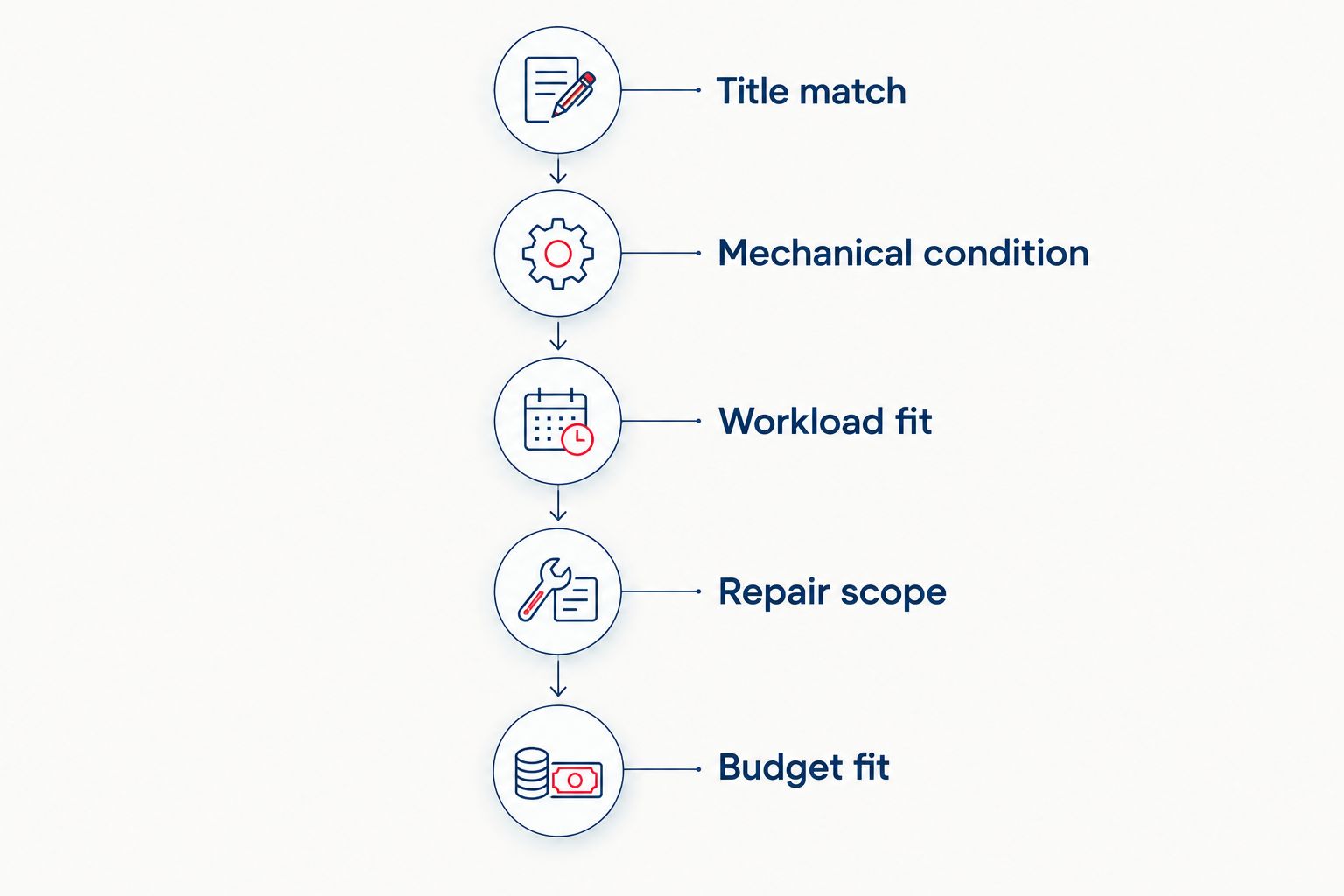
A mistake becomes useful only when it changes the next decision. My recommendation is to stop treating an attractive truck as an exception to your inspection rules. If the evidence is incomplete, pause the purchase.
How I ranked these truck types
This ranking prioritizes everyday fit, then specialized capability. The Silverado 1500 crew cab takes the default slot because it addresses mixed passenger and pickup use. The Colorado serves the smaller-truck buyer; the HD models require a workload justification; the older regular cab serves a narrower budget-focused use case.
This is not a claim that every Silverado outranks every Colorado. The inspected vehicle outranks the model recommendation. A documented fault can move the first-ranked option off your shortlist entirely.
Which used Chevrolet truck should you choose?
If you are undecided, start your 2026 search with a Chevrolet Silverado 1500 crew cab and a Chevrolet Colorado. Compare space, parking, condition, and workload fit before considering heavy-duty alternatives.
Testarossa Motors is a practical starting point for Greater Houston buyers considering clean-title used trucks. That does not remove the dealership’s commercial incentive: Testarossa Motors buys and sells vehicles, and you have the right to verify a truck independently.
Financing also needs its own decision. Testarossa Motors is not buy-here-pay-here, does not finance vehicles directly, and does not make money from financing or warranties itself. Review the lender’s terms rather than assuming a truck recommendation establishes approval or affordability.
FAQ
What is the best used Chevy truck for everyday driving in League City?
The Chevrolet Silverado 1500 crew cab is my default shortlist choice for mixed passenger use and pickup duties. Choose the individual truck only after checking condition, configuration, and budget fit.
Is a Chevrolet Colorado better than a Silverado for me?
The Chevrolet Colorado is the better starting point when a smaller pickup meets your needs. Compare passenger space, cargo fit, and the specific vehicle’s ratings before deciding.
Should I buy a Silverado 1500 or a Silverado 2500 HD?
Start with the Silverado 1500 unless your documented workload requires a suitable Silverado 2500 HD. The exact truck’s payload and towing ratings—not the badge alone—settle the capability question.
Do I need a Silverado 3500 HD for towing?
You need a Silverado 3500 HD only if a suitable configuration is required for your actual load. Account for the trailer, passengers, equipment, and relevant weight ratings before selecting a truck.
Is an older Silverado a good budget purchase?
An older Silverado is a good budget candidate only when inspection establishes acceptable mechanical condition and repair exposure. Lower purchase commitment does not compensate for an unexplained engine or transmission problem.
Does a clean title mean a used truck has no problems?
No. A clean title does not establish accident-free history or current mechanical condition. Verify the paperwork, investigate the history, and arrange an independent inspection.
Does Testarossa Motors finance used Chevy trucks directly?
No. Testarossa Motors offers financing options but does not finance vehicles directly and is not buy-here-pay-here. Review the lender’s agreement and your total obligations before committing.
Should I choose 2-wheel drive or 4-wheel drive?
Choose the drivetrain that fits the conditions in which you actually use the truck. Verify the fitted system and its condition; 4-wheel drive is not a substitute for checking payload, towing ratings, or mechanical health.
One last thing
Before a 2026 test drive, write down what would make you walk away. Include unresolved drivetrain symptoms, inconsistent paperwork, unsuitable ratings, and financing obligations you cannot comfortably carry.
A written stopping rule protects you from changing your standards because you like the truck. Buy the evidence, not the explanation.
Related guides
- Used pickup trucks for sale in League City
- Used 4×4 pickup trucks for Houston buyers
- Clean-title used trucks and SUVs in League City
- Used-car buying guidance for bad-credit buyers in Houston