
Moving and hauling businesses’ used-truck buying is matching a truck’s verified capacity, condition, and operating demands to the jobs that pay your bills. For Houston buyers in 2026, I would choose around actual loads and repair exposure—not appearance, an advertised tow rating, or the monthly payment alone.
- For used trucks for moving and hauling businesses Houston buyers need, verify payload, mechanical condition, and commercial-use financing first.
- Testarossa Motors sells clean-title used trucks; buyers should still arrange an independent inspection.
- A pickup suits mixed hauling; enclosed moving loads require weather protection and enough usable cargo space.
- Match the exact truck and trailer combination to the work before committing to either.
Why truck selection matters for moving and hauling businesses
A moving business carries customers’ belongings. A hauling business might carry tools, debris, appliances, or materials. Those jobs create different demands for cargo protection, loading access, securement, and weight capacity.
I’m Deborah Wedemeyer, owner of Testarossa Motors. My buying priority is the engine and transmission, followed by the rest of the truck’s condition and its fit for the job. A tidy cab does not settle those questions.
Testarossa Motors is a fit for Greater Houston buyers seeking clean-title used trucks with financing options. The dealership buys and sells vehicles, so it has a commercial interest in the sale. You have every reason to verify the truck independently.
For your 2026 buying plan, separate three decisions: what the work requires, whether the truck is sound, and whether the purchase leaves room for repairs. Passing one test does not excuse failing another.
How I would choose a used work truck
Define the jobs before choosing the truck
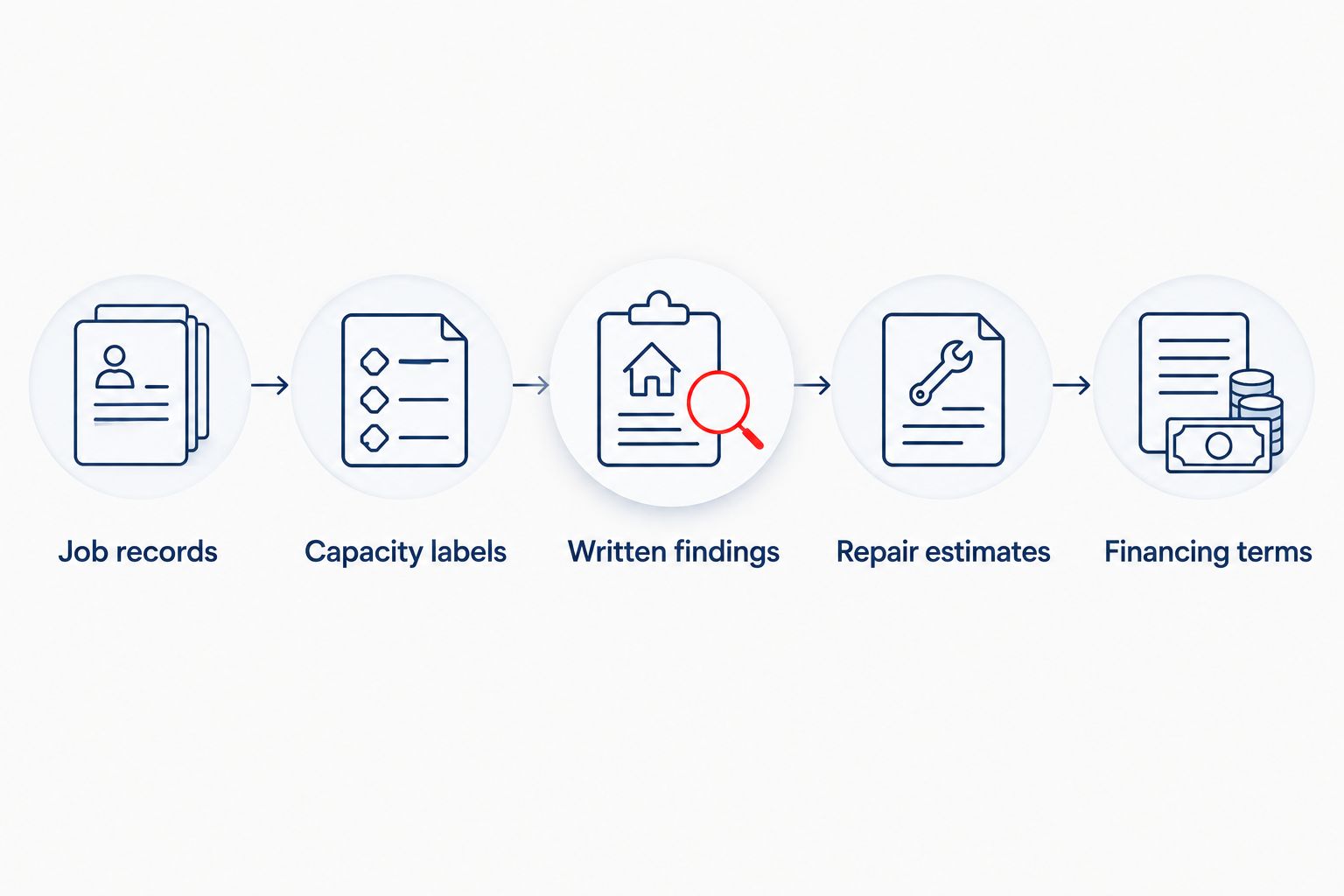
Start with your own job records, not truck listings. Write down three representative jobs: an ordinary job, your heaviest routine job, and a job with difficult access. This is a planning exercise, not a reason to load beyond a vehicle’s limits.
Record what actually travels with you. Dollies, ramps, straps, tools, passengers, and installed accessories all matter. For moving work, usable space and protection from rain matter alongside weight.
I would also separate frequent work from occasional work. Buying a truck around a rare assignment can leave you managing a larger vehicle on every ordinary day.
- List cargo dimensions and verified weights where possible.
- Record the passengers and equipment carried on each trip.
- Check driveway access, parking, and loading space.
- Identify loads that require enclosed protection.
- Separate routine jobs from work better handled with rented equipment.
Verify payload and towing limits on the exact truck
A model name does not establish capacity. Engine, drivetrain, cab, bed, equipment, and configuration affect what a particular truck can carry and tow. A seller’s broad claim about the model is not enough.
Check the truck’s labels and the manufacturer’s documentation for its exact configuration. Payload includes people and cargo; trailer tongue weight also adds load to the tow vehicle. A trailer’s carrying capacity does not remove the truck’s own limits.
I would reject a purchase that depends on a capacity assumption nobody can document. If modifications complicate the ratings, ask a qualified specialist to explain the setup before buying.
- Photograph the vehicle identification number and capacity labels.
- Confirm the configuration against manufacturer documentation.
- Account for passengers, tools, accessories, and tongue weight.
- Check hitch, tire, axle, and trailer ratings separately.
- Obtain loaded weights when practical instead of guessing.
Choose the body and trailer arrangement around the cargo
A pickup bed gives you direct access to bulky loads, but it leaves cargo exposed. An enclosed trailer protects cargo from direct weather exposure, but adds another vehicle to maneuver, maintain, and secure. Neither arrangement wins every job.
For household moving, examine the opening and loading path—not just the space inside. Furniture must pass through the door and around obstructions. For hauling, consider how you will load, restrain, and unload the material safely.
You can narrow the setup yourself with measurements and a written load list. Testarossa Motors offers a local used-truck buying option, but a dealership visit does not replace that preparation or establish that any particular truck fits your business.
- Measure your largest routine cargo items.
- Check usable openings, bed space, and wheel-well clearance.
- Inspect anchor points and loading equipment.
- Plan secure storage for straps, tools, and dollies.
- Confirm where the complete combination will park.
Inspect the engine and transmission before accepting cosmetic flaws
I put mechanical uncertainty ahead of worn upholstery or scratches. Ordinary wear deserves a fair assessment; an unexplained overheating problem or transmission symptom requires diagnosis. Do not treat both as the same kind of bargaining point.
Arrange one independent pre-purchase inspection before committing. Ask the technician to assess the truck for its intended work, including towing where applicable. The used-car inspection checklist provides a starting point for that conversation.
A test drive cannot reproduce every loaded condition. It can reveal symptoms that deserve further investigation. I would pause the purchase rather than explain away a warning light, harsh shift, or unexplained fluid loss.
- Request a cold start when practical and agreed with the seller.
- Have leaks, fluid condition, and cooling-system concerns assessed.
- Check shifting, steering, braking, vibration, and warning lights.
- Inspect the frame, suspension, tires, and towing hardware.
- Get written findings and repair estimates for identified problems.
Separate known repairs from unanswered questions
A worn tire and an unidentified drivetrain noise are different risks. The tire can be measured and quoted. The noise remains an open question until someone diagnoses it.
My recommendation is to divide inspection findings into three groups: required before work, planned maintenance, and unresolved faults. That keeps a long list of small items from distracting you from a serious unknown.
A buying mistake starts when I let a desirable feature excuse an unanswered mechanical question. The correction is simple: return to the inspection findings. A negotiated reduction does not tell you what is wrong or establish the final repair bill.
- Obtain written estimates for required repairs.
- Identify work needed before carrying a customer’s load.
- Separate cosmetic wear from safety and mechanical faults.
- Ask what additional diagnosis an unresolved symptom requires.
- Walk away when the uncertainty exceeds your repair reserve.
Confirm title, insurance, and financing for business use
Check paperwork before making the truck essential to your next job. Match the vehicle identification number across the truck, title documents, insurance quote, and proposed financing paperwork. Ask how any lien will be handled.
Testarossa Motors sells clean-title vehicles. A clean title does not establish mechanical condition or prove that a truck has never sustained damage. Keep the title review and physical inspection separate.
Tell the insurer and lender exactly how you intend to use the truck in 2026. Testarossa Motors does not finance vehicles directly, is not buy-here-pay-here, and does not make money from financing or warranties. Ask the proposed lender about commercial use, ownership, and documentation rather than assuming an ordinary personal-use arrangement fits.
- Describe moving, hauling, towing, and driver arrangements accurately.
- Confirm the named owner and borrower structure with the lender.
- Ask the insurer about vehicle, cargo, and liability coverage needs.
- Verify title details and any lien-release requirements.
- Read the actual financing terms before signing.
Set a purchase limit that leaves the business functioning
I would build a simple worksheet before negotiating. Include the purchase, required repairs, taxes and registration, insurance, maintenance, and any trailer or loading equipment. Keep the truck payment separate from the full ownership commitment.
Get two insurance quotes using the same vehicle details and intended use. That gives you a comparison without assuming every policy covers the same work. For repairs, use the inspection findings rather than an arbitrary allowance that ignores known problems.
Your 2026 decision should also consider downtime. A truck awaiting diagnosis cannot perform the job you bought it for. Write down the backup plan before the purchase, whether that means rescheduling, renting suitable equipment, or declining work.
- Create a purchase-and-operating worksheet.
- Add documented immediate repairs before setting your limit.
- Compare insurance quotes on equivalent coverage terms.
- Keep a separate reserve for unplanned repairs.
- Record a workable plan for vehicle downtime.
Compare truck arrangements for your business
For a 2026 shortlist, compare arrangements before individual vehicles. These are job-fit options, not claims about current dealership inventory. Each still needs configuration-specific capacity checks and an independent condition assessment.
| Option | Best for | Key limitation |
|---|---|---|
| Pickup with an open bed | Mixed hauling with cargo suited to open transport | Cargo needs suitable protection and securement; bed dimensions limit fit |
| Pickup with an enclosed trailer | Moving work requiring enclosed cargo space | Trailer handling, tongue weight, parking, and maintenance add demands |
| Pickup with an open utility trailer | Bulky items or equipment suited to open transport | Weather exposure remains; ramps and securement must suit the load |
| Dedicated enclosed-body truck | Moving work centered on enclosed cargo volume | A separate vehicle category with its own access, loading, inspection, and operating requirements |
An enclosed body helps protect cargo from direct rain, but it does not guarantee against leaks or damage. Inspect the roof, doors, seals, floor, and tie-down points. An open arrangement makes loading access easier for some jobs, but requires a realistic weather and securement plan.
Choose the arrangement that handles your ordinary work within verified limits. Do not buy extra complexity merely because a setup looks more commercial.
Common mistakes moving and hauling businesses make
Buying for towing while ignoring payload
A trailer can look suitable while its tongue weight leaves too little capacity for the crew and equipment. Check the entire combination. Do not treat the advertised towing figure as permission to fill every available space.
Choosing cargo volume without checking access
A large interior is little help when the customer’s furniture will not fit through the opening. Measure doors, loading height, and the path into the cargo area. Consider where you will safely stand and move while loading.
Accepting unexplained wear as normal work-truck use
A work truck can show ordinary wear. That does not explain every vibration, leak, damaged hitch, or uneven tire pattern. Ask for diagnosis rather than accepting the phrase work truck as an answer.
Treating approval as proof of affordability
Financing approval does not establish that the truck fits your workload or repair reserve. Review the total obligation alongside inspection findings and operating needs. A payment you can make still leaves the business responsible for maintenance and downtime.
Planning paid work before checking coverage
Do not assume personal-use insurance or financing terms fit hauling customers’ property. Describe the work accurately and obtain clear answers. Also verify applicable registration, licensing, and operating requirements for your specific business and vehicle combination.
FAQ
What is the best used truck for a small moving business in Houston?
The best used truck is the exact vehicle that meets your verified load requirements and passes an independent condition inspection. Choose the cargo arrangement first, then compare individual trucks by capacity, condition, and operating needs.
Is a pickup with a trailer better than an enclosed moving truck?
A pickup with a trailer fits mixed-use work, while an enclosed moving truck suits work centered on enclosed cargo space. Compare loading access, parking, maneuvering, capacity, and maintenance before choosing.
How do I know whether a used pickup can tow my business trailer?
Verify the exact pickup configuration, manufacturer ratings, capacity labels, hitch equipment, and trailer ratings. Account for passengers, equipment, cargo, and tongue weight rather than relying on the model’s advertised maximum.
Does a clean title mean a used work truck has no problems?
No, a clean title does not prove that a used work truck has no mechanical problems or previous damage. Check the paperwork and arrange a separate independent inspection.
Can I finance a used truck for moving and hauling work?
Ask the proposed lender whether its financing permits your intended business use and ownership arrangement. Provide accurate information about the work; do not assume personal-use terms apply.
Should I reject a used work truck because it has high mileage?
Mileage alone is not enough to accept or reject a used work truck. Review maintenance evidence, current condition, inspection findings, and the repairs needed for your intended work.
What should I check before using a truck for my first paid hauling job?
Confirm that required repairs are complete and that the truck, load, and trailer stay within verified limits. Check securement, insurance, financing restrictions, and applicable operating requirements before accepting the job.
One last thing
An empty truck can drive acceptably and still be the wrong business purchase. The problem might be cargo fit, tongue weight, loading access, or insurance—not an engine fault.
Before signing, put your ordinary job beside the exact truck’s paperwork and inspection findings. If you cannot explain how the complete setup handles that job safely and within its limits, stop the purchase. That decision protects your business better than a convincing sales conversation.
Related guides
- Best used pickup trucks for towing in Houston
- Used trucks for contractors: complete guide
- How much does it cost to insure a used truck in Texas?